Fitness • Fitness Well
Walking Lunges: Form, Modifications, and Progressions
Learn a step-by-step lunge setup, easier variations, common form questions, and ways to progress gradually.
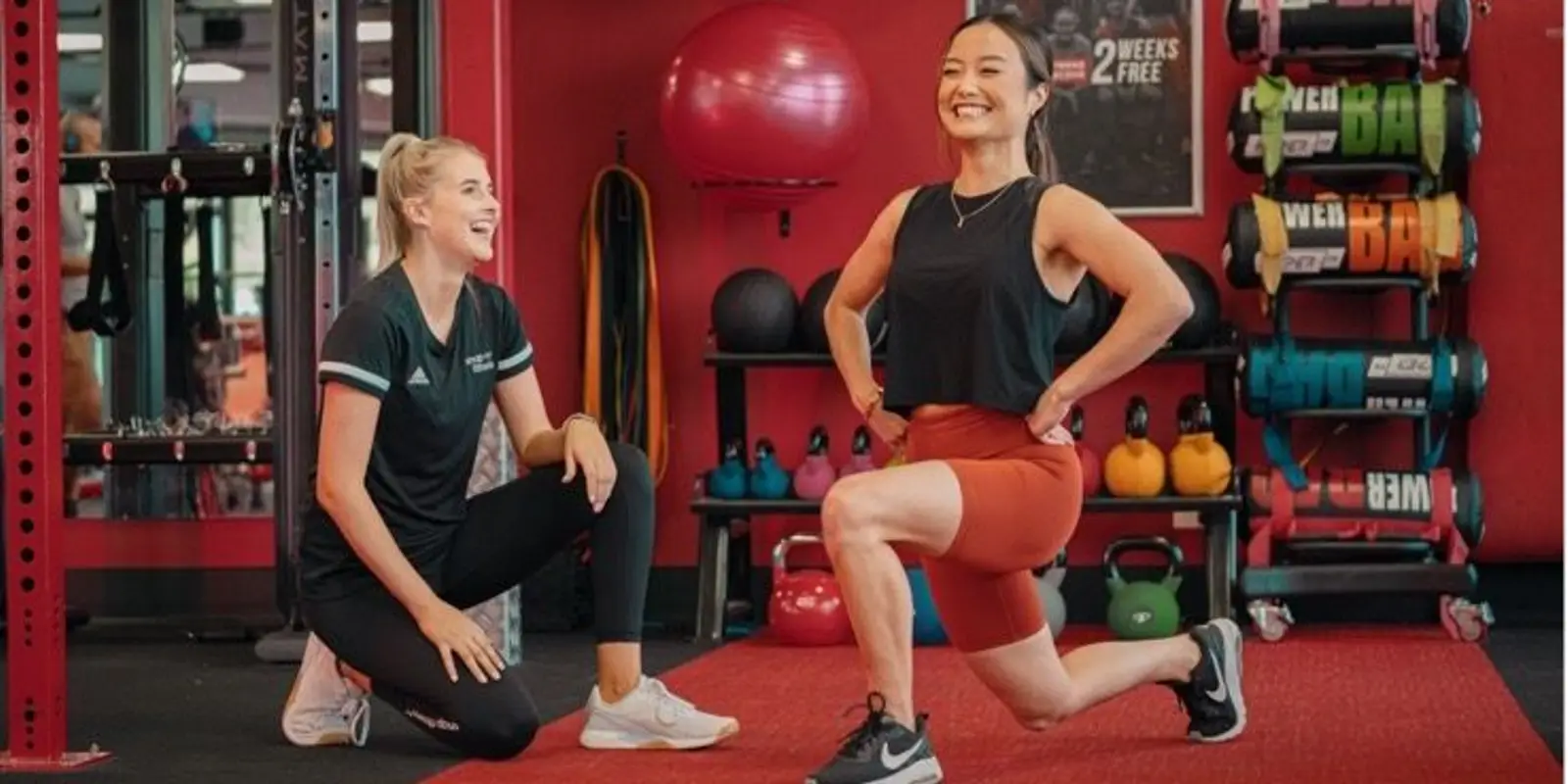
Walking lunges are a lower-body exercise that combines stepping with a controlled bend of the hips and knees. They can be done without equipment, but the moving version asks for more balance and coordination than a stationary lunge. You do not need to lower your back knee to the floor or use a large step. Start with a range you can control.
This guide explains the movement and offers easier options. It is general exercise information, not a rehabilitation plan. If you have knee, hip, back, or balance concerns, ask a healthcare professional whether lunges are appropriate for you.
Set up before the first repetition
Choose a flat, nonslip surface with enough space to step forward and backward. Stand near a wall or sturdy support if you want help balancing. Wear shoes that feel stable. Begin with a few minutes of easy walking or marching, then practice shifting your weight from one foot to the other.
The National Institute on Aging recommends warming up before strength activity, starting with a level that suits your ability, and increasing resistance or repetitions gradually.[1] That principle works well for lunges. You can begin without weights and use a smaller range while learning.
How to do a stationary split squat
A stationary lunge is a useful first step before walking lunges:
- Stand with feet about hip-width apart, then step one foot forward and one foot back as if standing on train tracks, not a tightrope.
- Keep both feet pointed mostly forward. Hold a wall or chair lightly if needed.
- Bend both knees a small amount, lowering your body only as far as comfortable. The back heel can lift naturally.
- Press through the front foot to return to standing, then reset your stance.
- Try a few repetitions on one side, then switch legs.
You do not have to reach a 90-degree knee angle or bring the back knee close to the floor. The goal is a controlled movement. If the front knee moves inward, your torso twists, or you lose balance, shorten the range or stop and reset.
How to do a walking lunge
Once the stationary version feels stable, try a short walking lunge. Stand with feet hip-width apart. Step one foot forward far enough to create a balanced stance, then bend both knees slightly. Keep your chest comfortable and your torso steady. Press through the front foot to stand and bring the back foot forward into the next step. Repeat on the other side.
Take small steps at first. A long stride can make it harder to keep balance and control. Keep your front knee tracking in the same general direction as your toes without forcing a particular angle. The back knee does not need to touch the ground. Move slowly enough that you can pause between steps.
If you have difficulty stepping backward, turn around when you reach the end of the space rather than walking backward. Keep the path clear of rugs, pets, or equipment. You can also do a few stationary repetitions on each side instead of moving across the room.
Easier options
- **Use a support:** Hold a countertop or rail with one hand while practicing a stationary lunge.
- **Shorten the range:** Bend the knees only slightly and rise before balance changes.
- **Try a reverse step:** Step one foot backward into a split stance, then return to standing. Use a wall for support and stop if the backward step feels unstable.
- **Use a chair:** Practice sit-to-stands from a stable chair if stepping or bending is not comfortable.
- **Skip the lunge:** Choose another lower-body movement recommended by a trainer or physical therapist.
An easier version is not a failure. You can use it as your regular exercise if it suits your ability and goals.
Common form questions
**How far should I step?** Choose a step that lets you remain balanced and lower a small amount without pain. The right distance varies with leg length and mobility.
**Should my front knee stay over my ankle?** Use a comfortable stance and keep the knee moving in the same direction as the toes. Do not force your knee into a fixed position if it causes discomfort. A qualified trainer can help you observe your form.
**Should the back knee touch the floor?** No. Lower only as far as you can control. A shallow bend is enough to practice the movement.
**Where should my hands go?** Keep them at your sides, on your hips, or on a support. Holding dumbbells is optional and should come only after you are comfortable with bodyweight lunges.
Build a short practice
Try one set of a few stationary repetitions on each side. Rest, then decide whether to repeat or stop. If the movement feels stable, practice a few small forward steps on a clear path. You do not need to do 10 or 12 repetitions if that is too much. NIA recommends muscle-strengthening activity on at least two days a week for older adults, and lunges are one possible lower-body movement among many.[1]
If you want to progress, change one factor at a time. You might add a few repetitions, increase the range slightly, or use a light hand weight. Do not increase step length, speed, weight, and total repetitions at the same time. Leave room for rest and other forms of movement.
When to stop or choose another exercise
Stop if you feel sharp pain, sudden weakness, numbness, dizziness, or a loss of balance. If the movement causes recurring knee or hip discomfort, reduce the range or stop and seek guidance. MedlinePlus recommends warming up, increasing exercise gradually, and paying attention to pain rather than pushing through it.[2]
Walking lunges are optional. A step-up, sit-to-stand, supported squat, or another exercise may suit you better. Ask a physical therapist or healthcare professional for individualized guidance if you are recovering from injury or have a condition affecting your hips, knees, or balance.
Keep the movement practical
Lunges can be practiced with body weight in a small space, but they are not required for a balanced routine. Use a support, shorten the step, or choose a different movement whenever needed. Focus on stable footing and controlled motion. The version you can repeat comfortably is a better starting point than the deepest or fastest lunge.
A progression that leaves room for practice
You can learn the movement in stages. Begin by holding a split stance with a support and shifting weight gently between the feet. Next, practice a shallow bend and return to standing. When that feels stable, try a small forward step and step back to the starting position. Only after you can do that comfortably should you consider walking forward for several steps. You can stop at any stage and keep that version.
This sequence is not a timetable. Someone may stay with the supported split stance because it is the most useful option for them. Another person may prefer to practice step-ups instead. If you are training for a specific activity, ask a qualified coach or physical therapist which variation makes sense for that goal. Do not use a deeper lunge as the only measure of progress.
Space and footwear
Practice on a flat surface with enough room to step and turn. Avoid slick socks on smooth floors. Shoes should feel stable and allow your toes to spread comfortably. If using a mat, make sure it does not slide underfoot. Keep pets, bags, and loose cords out of the path. These small setup choices can make it easier to focus on the movement rather than on obstacles.
Sources and further reading
- Three Types of Exercise Can Improve Your Health and Physical AbilityNational Institute on Aging · Accessed 2026-11-03
- How to avoid exercise injuriesMedlinePlus, U.S. National Library of Medicine · Accessed 2026-11-03