Fitness • Fitness Well
A Short At-Home Workout with Low-Impact Options
Four modified movements for a brief home circuit, with safe setup, rest guidance, and realistic expectations about mood.
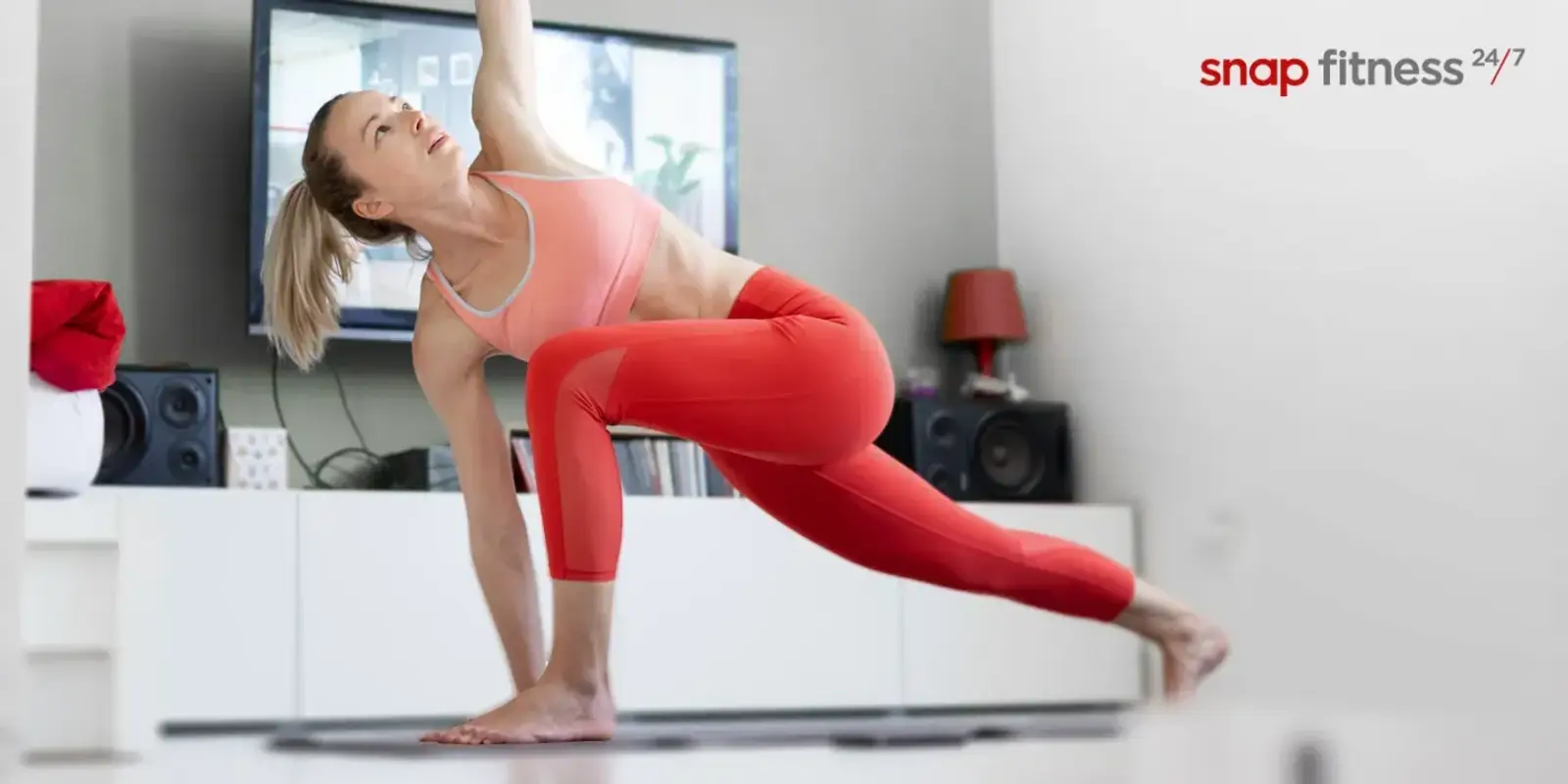
Movement can be one way to add structure to a day, but no workout can guarantee a better mood. The circuit below adapts four exercises from the source article with low-impact alternatives and safer equipment choices. It is a general routine, not a mental health treatment or a personalized training plan.
Choose the version that fits your current ability. If you have a chronic condition, recent injury, balance concern, or symptoms during exercise, ask a healthcare professional what movements are appropriate. You can also choose a walk, stretching, or rest instead.
Set up for a short session
Use a clear, nonslip floor and a stable wall or counter. Have a chair nearby if you want support. You do not need to complete three sets of ten repetitions if that amount is too demanding. Start with one comfortable set of each movement, take rest as needed, and stop before your form changes.
A brief warm-up can be easy marching or walking around the room. Keep breathing normally. At moderate aerobic intensity, the CDC says you can generally talk but not sing; if you are breathing too hard to speak more than a few words, slow down or rest.[1] This is a general cue, not a medical test.
1. Side step instead of a skater hop
Stand with feet about hip-width apart and a stable support within reach. Step to the right, bend your knees slightly, and shift weight over the right foot. Bring the left foot in, then repeat to the left. Let the arms move naturally if that feels comfortable.
If balance is steady and you already know the movement, you can make the step quicker or add a small hop. Hopping is optional. Keep the step short enough that you can land and change direction without losing control. If you feel unsteady, hold the support or use a seated side-to-side leg movement.
2. Wall or counter push-up
Place your hands on a wall at chest height, slightly wider than your shoulders. Step back a little, keep your body aligned, and bend your elbows to bring your chest toward the wall. Press back to the starting position. Use a wall for an easier version or a stable counter for more challenge.
The cross-over push-up in the source requires moving the hands and feet sideways while in a plank. That can be difficult to control. You do not need it for this session. If you already practice floor push-ups, use a standard push-up or a knee push-up only if you can maintain a stable position. Stop if wrists, shoulders, or back hurt.
3. Supported row with a resistance band
The source suggests pulling against a door frame. Do not pull on an unverified frame or brace your feet against a wall that could slip. Use a resistance band only if it is designed for exercise and anchored to a secure point according to its instructions.
Sit or stand upright with the band in front of you. Hold both ends, keep elbows near your sides, and draw your hands toward your ribs. Pause briefly, then return slowly. If you do not have a safe anchor, use a light dumbbell row while supporting one hand on a stable chair or bench, or skip the movement.
4. Side plank variation
A full side plank can be demanding on the shoulder and trunk. For a lower-demand option, lie on your side with knees bent and forearm on the floor under the shoulder. Lift your hips a small distance, hold only while you can breathe comfortably, then lower. You can also do a standing side brace by placing one hand against a wall and gently pressing into it.
Do not dip repeatedly through a painful range. If your shoulder or wrist feels uncomfortable, use the standing version or choose a different movement. You do not need to keep your body in a perfect straight line for a set number of seconds; stop when control changes.
Put the circuit together
Try one round with a short interval—perhaps six to eight controlled repetitions per side or 20 seconds of movement—then rest before moving on. The exact count is a starting suggestion, not a target. If you feel comfortable and want to continue, repeat the round once. A short, controlled circuit is preferable to rushing through a number that does not fit your body.
You can turn the session into a moderate interval routine by alternating movement with rest. If your goal is vigorous effort and you are already accustomed to exercise, consider professional guidance before increasing intensity. The federal activity guidelines allow adults to build toward weekly aerobic and strengthening targets gradually.[2]
Adjust for space and equipment
The circuit works in a small space if the floor is clear. Avoid slippery rugs, loose cords, or furniture that can move. If you do not have a band, omit the row or choose a supported dumbbell variation. Do not improvise with a towel looped around a door handle unless the setup is specifically designed and verified to hold resistance.
If standing is not accessible, use seated alternatives: seated side steps, seated band presses, and a supported row with a secure anchor. You can also change only one movement. A workout does not have to include every exercise to be useful.
Notice how the session feels
Some people enjoy moving with music or completing a short routine. Others find exercise neutral or tiring. You do not need to feel happier immediately for the session to count. The CDC notes that a session of moderate-to-vigorous physical activity can reduce short-term feelings of anxiety for adults, but this is not a guarantee for each person.[3]
Stop if you feel chest pressure, faintness, sudden weakness, sharp pain, or severe shortness of breath. MedlinePlus advises warming up, increasing activity gradually, and responding to pain rather than pushing through it.[4] Seek medical advice for symptoms that concern you or do not settle.
Keep expectations realistic
Use the circuit as one option for movement, not a replacement for mental health care. If low mood, anxiety, or distress persists or interferes with daily life, contact a healthcare provider or mental health professional. A walk, a short circuit, or a rest day can each be part of a flexible routine. Choose what fits today, then adjust when your needs change.
Adapt the circuit to the room you have
If space is limited, keep the movements in one place and avoid crossing the floor. You can do side steps beside a counter, wall push-ups, a seated band row with a secure anchor, and a seated side brace. If you have no band, skip the row rather than improvising with a weak door handle. If you are exercising around other people, leave enough room that no one can trip over a mat or step into your movement path.
If you have only a few minutes, select one movement and repeat it at a comfortable pace. A short walk around the home or a few sit-to-stands can also be an option. The goal is not to complete all four exercises every time. You can change the order, take longer rests, or stop after one round. If a movement makes you feel worse, choose a different activity or rest.
Build consistency without chasing intensity
After trying the circuit once, note which version felt stable and which one needs an adjustment. Repeat the easier version before adding time or resistance. If you decide to progress, change one factor at a time and keep the rest period long enough to recover. There is no requirement to make each session harder than the last. A routine you can adapt is more useful than a fixed challenge that ignores how you feel.
Sources and further reading
- How to Measure Physical Activity IntensityCenters for Disease Control and Prevention · Accessed 2026-11-03
- Adult Activity: An OverviewCenters for Disease Control and Prevention · Accessed 2026-11-03
- Health Benefits of Physical Activity for AdultsCenters for Disease Control and Prevention · Accessed 2026-11-03
- How to avoid exercise injuriesMedlinePlus, U.S. National Library of Medicine · Accessed 2026-11-03