Wellbeing • Fitness Well
6 Practical Ways to Make Focus Easier During the Day
Six flexible strategies for reducing distractions, planning tasks, taking breaks, and protecting sleep without treating focus as a personal failing.
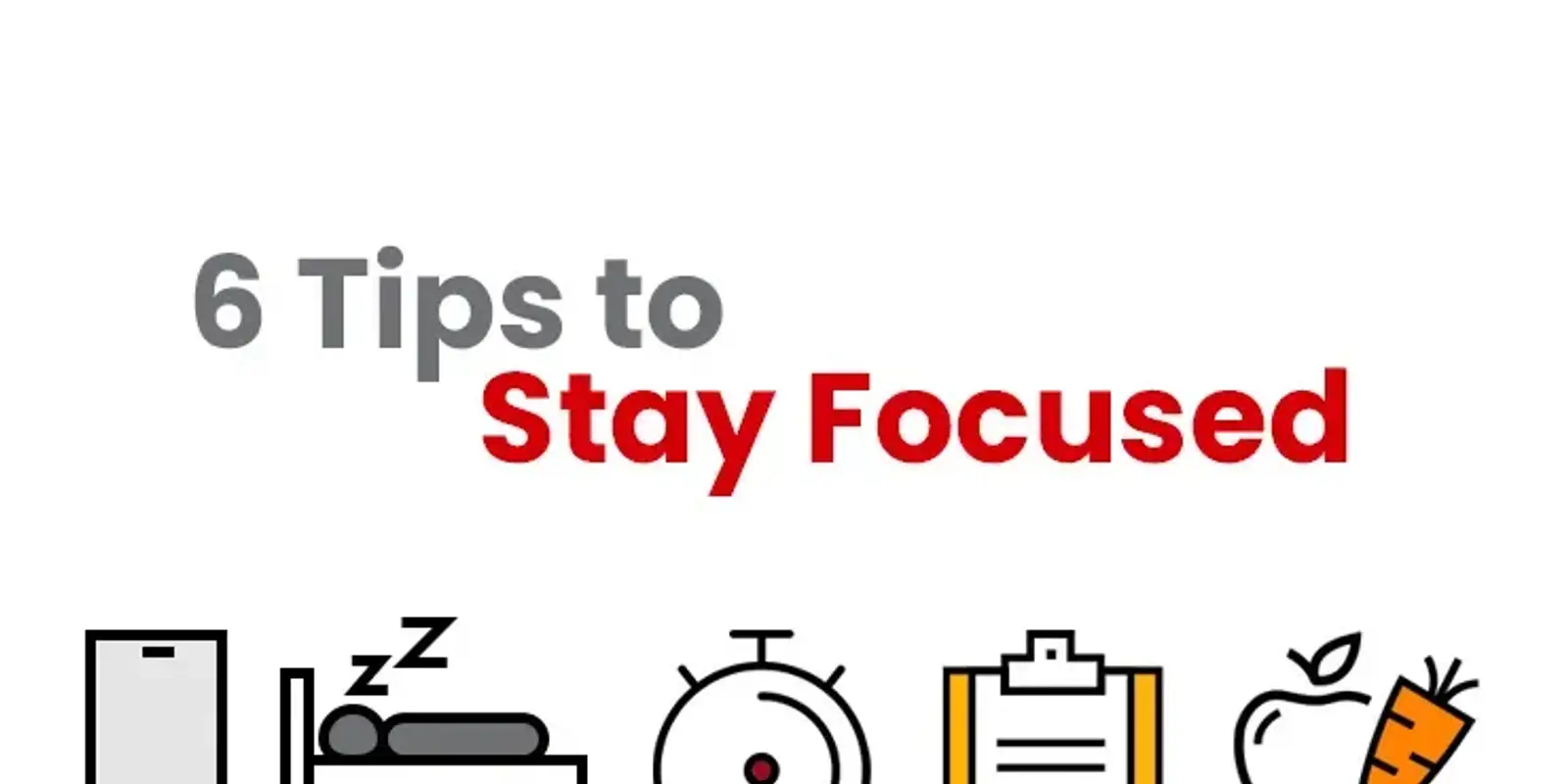
Concentration can feel harder when messages, errands, and competing tasks keep interrupting the day. You cannot control every distraction, and needing a break does not mean you lack discipline. Instead of trying to force perfect focus, adjust the conditions around one task and see what helps you begin.
These six ideas are practical experiments, not a treatment for attention problems. Focus can be affected by sleep, stress, health, work conditions, medication, and many other factors. If difficulty concentrating is new, persistent, or interfering with daily life, consider discussing it with a healthcare professional.
1. Reduce one avoidable distraction
Choose one task and make its immediate environment easier to use. Move to a quieter space if available, close unrelated browser tabs, or put your phone outside arm’s reach. If you need the phone for work, turn off nonessential notifications or use a focus setting for a short period. You do not have to eliminate every interruption; start with the one you notice most.
Set expectations with people around you when practical. A brief note such as “I am working on this until 11; I will reply after” can make boundaries clearer. If your role requires quick responses, choose a shorter focus interval and check messages at an agreed time. Do not silence safety alerts or communications that your work requires.
A helpful setup is specific: one document open, one clear next action, and the tools you need nearby. When you notice yourself switching tasks, write down the interruption and return to the next step. If the task is vague, define the first visible action instead of writing “finish project.”
2. Set a boundary around scrolling
Social media and news apps can invite frequent checking. If you want more control, move an app off your home screen, log out after use, or set a limit that reminds you to pause. You can also choose a particular time for checking feeds rather than opening them whenever there is a quiet moment.
Use settings that fit your device and responsibilities. A strict block may not work if you rely on the app for family contact, accessibility, or work. You can create exceptions for essential people or choose a softer reminder. If a setting becomes frustrating, change it. The aim is to make your choice more deliberate, not to punish yourself for using a phone.
Consider the habit that comes before checking. Are you bored, tired, avoiding a difficult task, or waiting for a response? You do not need to judge the reason. Noticing it can help you choose whether to open the app, take a break, ask for clarification, or begin a smaller task.
3. Use a short list to choose a next step
When tasks pile up, write them down in one place. Mark what must happen today, what can wait, and what needs another person or more information. Pick one next action that fits the time you have. A list can help externalize reminders, but it should not become a complete inventory of every possible obligation.
Keep the list short enough to review. If you have only ten minutes, choose a task that can make progress in that time, such as replying to one email or gathering materials. If a task is large, divide it into a first step: open the document, identify the question, or schedule the appointment. A visible action is easier to start than a broad intention.
Leave room for rest and unexpected work. A list is a planning aid, not a contract that you must finish perfectly. Move unfinished items forward or remove them if they no longer matter. NIMH recommends setting goals and priorities, deciding what must be done now and what can wait, and saying no to new tasks when you are taking on too much.[1]
4. Give the task a clear time boundary
A short work interval can make a task feel more approachable. Set a timer for a period that suits you—perhaps 15 or 25 minutes—and decide what you will work on before starting. When the timer ends, pause and check whether you need a break, more time, or a different next step. The exact length is personal; there is no magic interval.
If you work in a setting where interruptions are frequent, use smaller blocks. If you need longer to get into a complex task, reserve a longer period and schedule a check-in afterward. Keep a notepad nearby for unrelated thoughts that arise, so you can return to them after the session.
Breaks do not have to involve another screen. Stand, get water, look away from the monitor, or walk briefly if that is comfortable. If a timer makes you anxious, skip it and use a natural stopping point instead, such as finishing one paragraph or reviewing a set of notes.
5. Protect sleep and basic needs
Sleep problems can make daily concentration more difficult. CDC guidance says good sleep supports health and emotional well-being, and its adult recommendations vary by age.[2] Adults ages 18 to 60 generally need at least seven hours each night; older adults have different ranges.[2] Those are population recommendations, and actual circumstances differ.
A consistent bedtime and wake time may help some people. You could also prepare for the next day before bed, dim lights, or put away a device if it keeps you alert. If work shifts, caregiving, illness, or housing conditions make a regular schedule difficult, focus on one practical adjustment rather than blaming yourself for what you cannot control.
Pay attention to hunger, thirst, and fatigue. A meal break or a glass of water may address a basic need, but food and water are not a guaranteed fix for concentration problems. If you have a medical condition or specific instructions, follow those. Persistent sleep difficulty or concentration changes deserve professional attention rather than an endless series of productivity hacks.
6. Add movement or a reset between tasks
A brief walk, stretch, or change of position can create a transition between work blocks. Choose something comfortable and accessible. If movement is not practical, step away from the screen, look out a window, or listen to a song. NIMH includes regular exercise and relaxing activities among possible self-care practices, while noting that self-care differs from person to person.[1]
Movement is optional and should not be framed as a cure for distraction. If exercise causes pain, dizziness, or other symptoms, stop. If you have a condition that affects activity, ask a clinician about a suitable option. A reset can be quiet and brief; it does not need workout clothes, a gym, or a step tracker.
When focus feels persistently difficult
These adjustments may help with ordinary distraction, but they cannot diagnose or treat an underlying health concern. If trouble concentrating is severe, lasts, or makes it difficult to complete usual activities, talk with a healthcare professional. NIMH advises seeking help for severe or distressing symptoms lasting two weeks or more, including difficulty concentrating and trouble completing everyday tasks.[1] Seek support sooner if you are concerned or feel unsafe.
Choose one experiment
Pick one change for your next work block: silence one notification, write down the first step, set a short timer, or take a screen-free pause. Notice whether it made starting easier. Keep what helps, change what does not, and leave room for the demands you cannot control. Focus is not a fixed trait that you need to prove; it is a work condition you can sometimes shape with practical choices and appropriate support.
Sources and further reading
- Caring for Your Mental HealthNational Institute of Mental Health · Accessed 2026-11-03
- About SleepCenters for Disease Control and Prevention · Accessed 2026-11-03