Recipes • Fitness Well
Green Bean, Black Bean, and Tuna Salad
A two-serving salad with blanched green beans, spinach, black beans, tuna, capers, and pumpkin seeds.
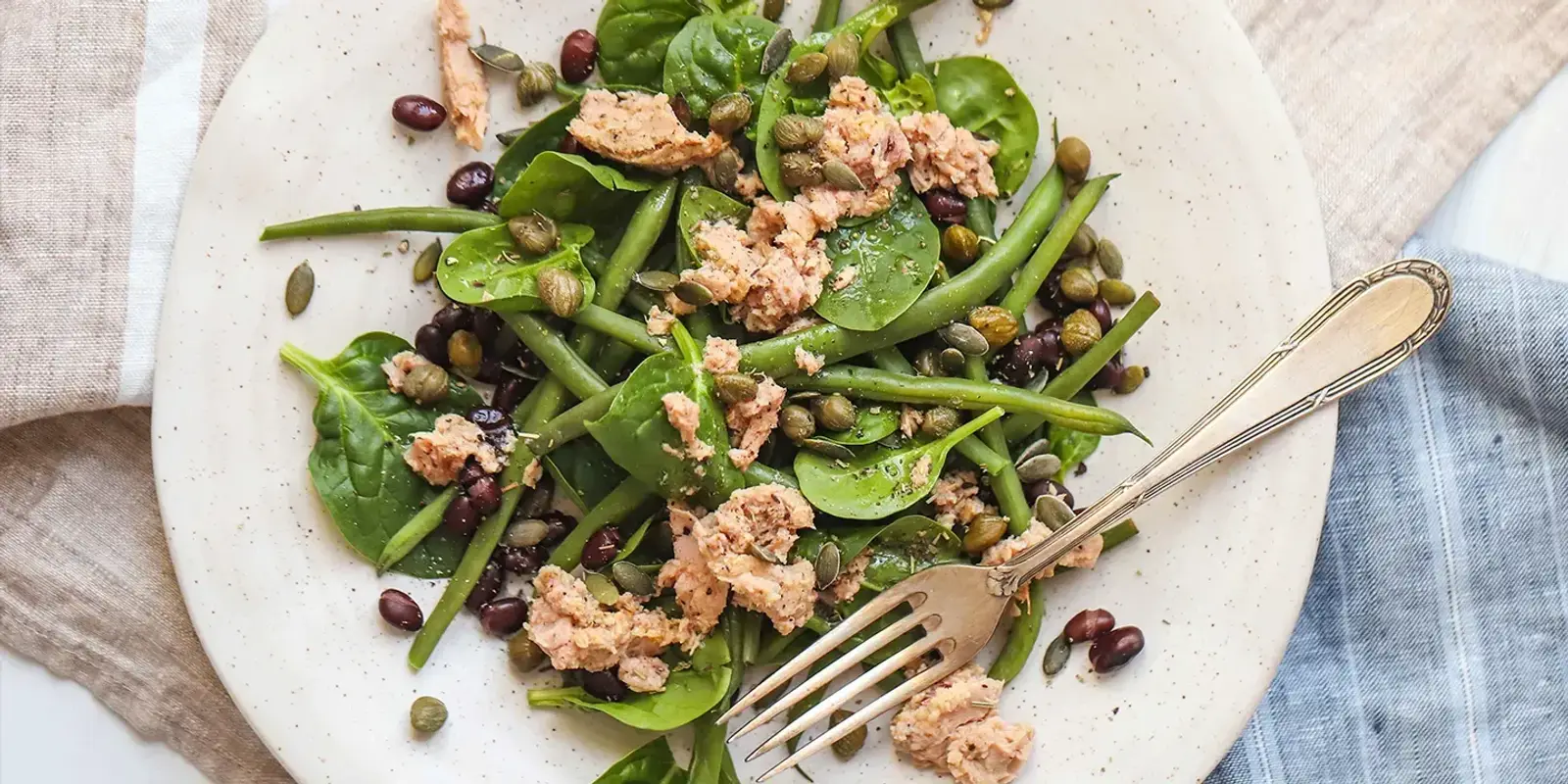
This green bean, black bean, and tuna salad combines crisp vegetables, canned beans, tuna, capers, and pumpkin seeds. It makes two generous servings or three smaller sides. The beans and tuna make it substantial enough to serve as a main dish, while the spinach and green beans add color and crunch. Adjust the capers and their brine to taste, since they can make the salad quite salty.
Ingredients
- ⅔ cup trimmed green beans, cut into bite-sized lengths
- 4 handfuls baby spinach, rinsed and dried
- ⅔ cup canned black beans, drained and rinsed
- ⅞ cup drained tuna in water, or one can adjusted to taste
- 1 tablespoon olive oil
- 1 teaspoon dried oregano
- 1 tablespoon capers, plus up to 1 teaspoon of brine
- 2 tablespoons pumpkin seeds
- Freshly ground black pepper
- Optional: lemon wedge or additional chopped herbs
Prepare the green beans
Bring a small pot of water to a boil. Add the green beans and cook for about 4 to 5 minutes, until they are bright and just tender but still have some bite. If you prefer softer beans, cook them a little longer and taste one to check.
Drain the beans and rinse briefly under cool running water to stop them cooking. Shake off excess water and pat dry. Wet beans can dilute the oil and caper dressing. Wash fresh produce under running water before preparing it; the FDA advises against using soap or detergent on fruits and vegetables.[1]
Prepare the beans and tuna
Drain and rinse the canned black beans, then let them drain well. Open and drain the tuna. Flake it with a fork into bite-sized pieces. If the tuna is packed in water, press it gently against the can lid or a strainer to remove excess liquid without crushing it into a paste.
Check the tuna for any large pieces that need breaking up. If using a different can size, add enough to make the salad satisfying for the people eating it. You can keep the extra tuna for another meal rather than forcing all of it into the bowl.
Mix the salad
Place the spinach in a large bowl. Add the cooled green beans and black beans. Sprinkle in the oregano and black pepper. Drizzle with olive oil and toss gently to coat the leaves without bruising them.
Fold in the tuna and capers. Add a small amount of caper brine, taste, and add more only if you want a saltier, sharper dressing. Capers vary in saltiness, and rinsing them can soften the flavor. Add the pumpkin seeds just before serving so they stay crisp. Finish with lemon juice or herbs if desired.
Divide between two bowls. Serve immediately, or chill briefly if you prefer a colder salad. If the salad sits, the spinach will soften as it absorbs dressing, so keep the oil and capers separate until close to serving when preparing ahead.
Make the texture work for you
For a softer salad, cook the green beans until tender and use smaller spinach leaves. For more crunch, blanch the beans for less time and add the pumpkin seeds at the table. If you dislike raw spinach, use a handful of warm green beans to gently wilt the leaves, then allow the mixture to cool before adding tuna.
The dressing is intentionally simple. Olive oil and caper brine provide richness and a salty, tangy flavor. If it tastes too sharp, add a little more oil or a squeeze of lemon. If it feels too oily, add more spinach or black beans. Adjust gradually and taste between changes.
Ingredient substitutions
Use cannellini beans or chickpeas instead of black beans if that is what you have. Canned beans are convenient; drain and rinse them before mixing. If you use dried beans, cook them until tender and cool them before adding. Do not use beans that are still firm or undercooked.
Canned salmon or cooked chicken can replace tuna, though flavor and texture will change. For a vegetarian version, omit tuna and add more beans, a cooked grain, or another protein food you enjoy. Pumpkin seeds can be replaced with sunflower seeds or omitted for a nut- and seed-free version. If allergies matter, check product labels and avoid cross-contact with utensils or surfaces.
Fresh oregano, parsley, dill, or basil can replace dried oregano. Start with a small amount, since fresh herbs vary in strength. Add cucumber, cherry tomatoes, or sliced red onion if you want additional vegetables; keep extra watery produce separate until serving so the salad does not become diluted.
Serve it as lunch, dinner, or a side
For a more filling bowl, serve the salad with bread, potatoes, rice, or another grain. It can also be spooned into a wrap or served beside soup. If serving guests, put dressing, capers, and seeds on the side so people can adjust the salt and texture. A lemon wedge and extra pepper make easy finishing options.
This salad is easy to scale. Double the ingredients for a larger group, but keep the dressing separate until serving. If you need to make multiple portions, layer spinach and beans in containers, place tuna in a separate compartment, and add oil, capers, and seeds later. This keeps the greens from sitting in liquid for several days.
Storage and food safety
Keep the salad chilled if not serving immediately. FoodSafety.gov lists tuna salad as a refrigerated food that keeps for 3 to 4 days at 40°F (4°C) or below.[2] Do not leave perishable food at room temperature for more than two hours, or more than one hour when the temperature is above 90°F (32°C).[3] If you are unsure how long it has been out, discard it rather than tasting it to check.
If packing the salad for lunch, use an insulated bag with a cold pack and keep the tuna chilled. Store leftovers in a covered container and keep the seeds separate. Add them just before eating. This helps preserve their crunch and keeps the salad fresher.
A quick meal from pantry staples
Canned beans and tuna make the recipe convenient, while fresh spinach and green beans add a different texture. It is a flexible meal, not a nutrition prescription. Use ingredients you enjoy, adjust the salt and dressing to taste, and keep the tuna cold until serving. The key is to dry the vegetables well, add the caper brine gradually, and keep crunchy toppings separate until the last minute.
Choose the preparation method that fits
If you do not want to boil water, steam the green beans until they reach the texture you like, then cool and dry them. Frozen green beans can also work; follow the package directions and drain away excess water before adding them to the salad. If you prefer a warmer meal, combine the beans and tuna while the green beans are still slightly warm, then add spinach after a short pause so it softens but does not collapse.
For a lunchbox, keep the spinach, tuna mixture, dressing, and seeds in separate sections if possible. Mix them just before eating. If you do not have compartment containers, put the spinach at the bottom, add the drained beans and tuna above it, and keep the oil and capers in a small sealed cup. This order reduces the time that delicate leaves sit in dressing and makes the meal easier to transport.
Sources and further reading
- Selecting and Serving Produce SafelyU.S. Food and Drug Administration · Accessed 2026-11-03
- Cold Food Storage ChartFoodSafety.gov · Accessed 2026-11-03
- 4 Steps to Food SafetyFoodSafety.gov · Accessed 2026-11-03