Fitness • Fitness Well
Low Back Pain: Five Gentle Movement Ideas to Discuss With a Clinician
Explore five low-impact movement variations with practical safety limits, plus signs that call for professional guidance.
Low Back Pain: Five Gentle Movement Ideas to Discuss With a Clinician
Low back discomfort can make ordinary tasks feel complicated: getting out of a chair, reaching for laundry, or turning to look over your shoulder. A list of stretches may sound appealing, but no single routine suits every person or every cause of pain. The movements below are options to understand and discuss, not a diagnosis or a promise of relief. A clinician or physical therapist can help decide whether any are suitable for your situation.
Start with safety, not a stretch
Back pain has many possible causes. A movement that feels comfortable for one person may aggravate another, and a new episode after a fall or injury deserves different attention from familiar stiffness after a long day. The National Institute of Neurological Disorders and Stroke notes that exercise can help some people with pain, while recommending that people consult a physician about low-impact exercises for the lower back and abdomen.[1] That guidance is a useful starting point: do not assume that a pose is safe just because it is popular online.
Seek prompt medical advice for severe pain, pain after significant injury, fever with back pain, new weakness or numbness, trouble walking, or changes in bladder or bowel control. MedlinePlus lists these and other warning signs that need professional assessment.[2] If pain is severe, worsening, unusual for you, or disrupting sleep and daily activity, contact a healthcare professional instead of trying to stretch through it. If you already have a treatment plan, follow it rather than substituting this article for it.
When a clinician has said gentle movement is reasonable, use a small range and move slowly. Breathe normally. Stop if a movement causes sharp or spreading pain, new tingling, weakness, dizziness, or symptoms that do not settle when you return to a comfortable position. Do not force a knee, spine, or hip toward an end range. A stretch should not become a test of toughness.
1. Supported child’s-pose variation
The source article describes a kneeling position with the torso reaching toward the floor. Some people find a supported version easier to control. Place a folded blanket or cushion under the knees, then sit back only as far as comfortable. Rest the forearms on a chair seat, stacked pillows, or another stable support instead of reaching as far as possible. Keep the head relaxed and breathe without holding your breath.
Stay for a few slow breaths, then come out by using your hands for support. There is no required five-minute hold. If kneeling bothers your knees, the position feels tight across your back, or getting down to the floor is difficult, skip it. A seated forward rest with forearms supported on a table may offer a simpler way to pause without loading the knees. These are comfort experiments, not ways to lengthen spinal discs or guarantee pain relief.
2. Small, comfortable knee rolls
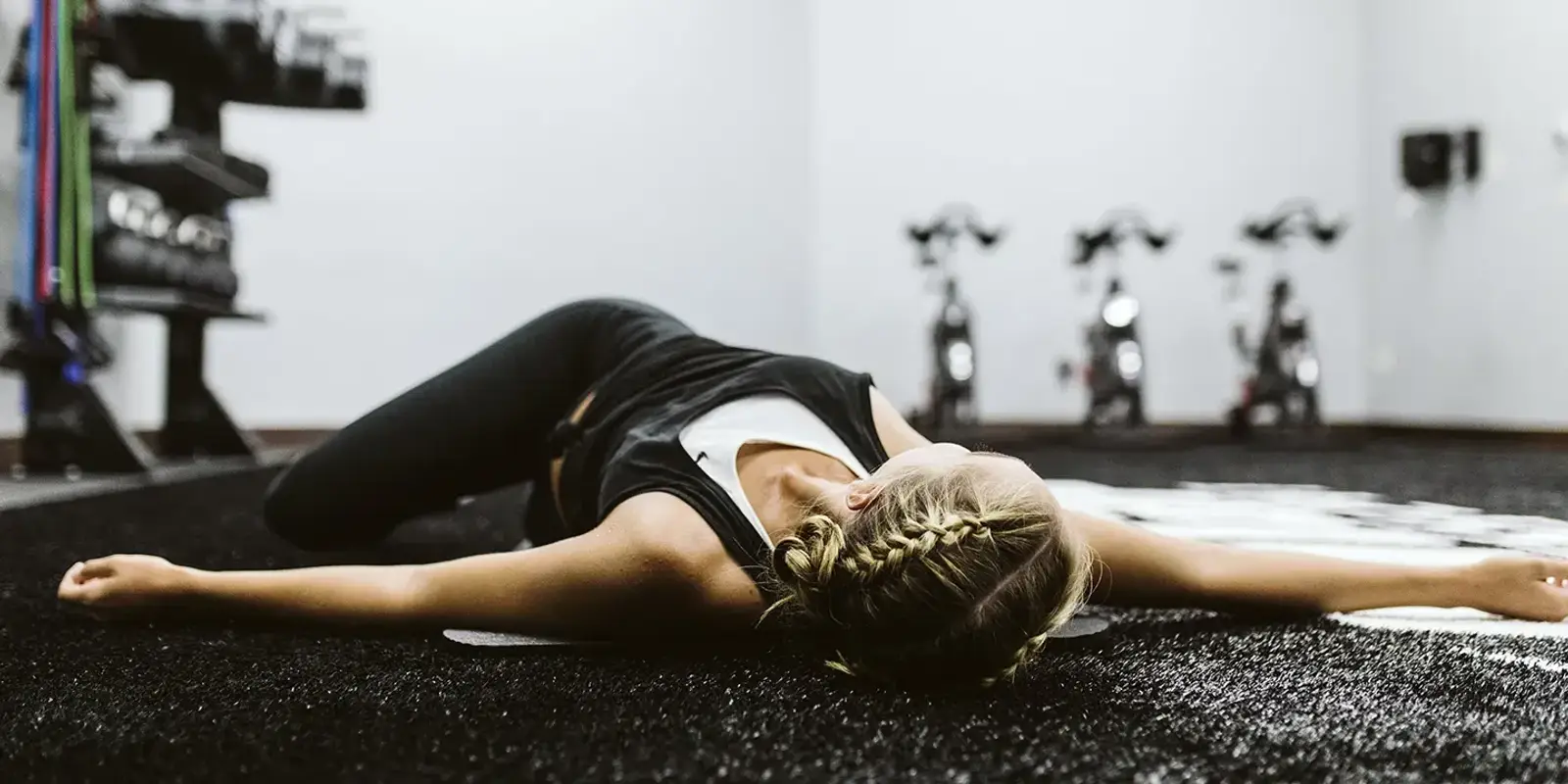
The original lumbar-rotation drill asks both bent knees to move toward the floor. Begin with a smaller version: lie on your back with knees bent and feet supported, if lying down is comfortable. Keep the movement slow and let both knees drift a short distance to one side. Return to center before trying the other side. Keep shoulders relaxed, and do not use the hands to push the knees down.
Try one or two easy repetitions first. A large twisting range is not the goal. If the motion increases pain, causes symptoms to travel down a leg, or makes you feel unstable, stop. Some people cannot comfortably lie on their backs; a seated, gentle trunk turn may be an alternative to discuss with a clinician, but it is not automatically safer. Ask for guidance if you are unsure which position fits your condition.
3. A gentle pelvic rock
A pelvic tilt can be introduced as a small awareness movement rather than an intense abdominal exercise. Lie with knees bent and feet supported. Without holding your breath, gently tighten the lower abdominal area and notice whether your pelvis rocks slightly so the lower back rests a little closer to the surface. Then release and return to a comfortable neutral position. Keep the movement subtle; do not press hard or brace maximally.
Try a few repetitions, pausing between them. The point is to explore whether this small motion feels comfortable, not to complete a high repetition target. If it produces pain or makes it harder to breathe normally, stop. People who are pregnant, recently injured, recovering from surgery, or managing a known spine or abdominal condition should ask a clinician before trying floor exercises. NINDS notes that strengthening exercises may be useful for some chronic low back pain, but advises checking with a physician before beginning an exercise program.[4]
4. One-knee movement, only if comfortable
The source article includes a knee-to-chest stretch. A less forceful way to explore the same general position is to lie on your back, keep one foot supported, and bring the other knee only a small distance toward your torso. You may use your hands behind the thigh rather than pulling directly on the kneecap. Stop well before strain. You do not need to reach your chest, hold for a minute, or repeat a set number of times.
If the position makes symptoms sharper, sends pain farther down a leg, or causes numbness, release it. People with hip or knee limitations may find the position uncomfortable for reasons unrelated to the back. A clinician can suggest another option. The original article’s confident claim that this stretch takes pressure off the spine is not a conclusion readers should assume applies to everyone.
5. A small prone press-up alternative
The original cobra-style exercise involves lying face down and pressing the upper body upward. This position can feel wrong for some people, so it should not be treated as a universal counter-stretch. If a clinician has suggested trying it and lying face down is comfortable, start by resting on your stomach with the head turned to one side or supported on folded arms. If that feels fine, you might gently prop the chest on the forearms without forcing the lower back to arch.
Keep the hips and legs relaxed. Return to a resting position if pressure builds or symptoms worsen. Do not push into a full press-up just because the source description lists a particular number of repetitions. If prone positioning increases pain, makes breathing difficult, or is not accessible, skip it and ask about alternatives. The aim is to notice your response and stay within the plan given by your own care team.
Build a routine around your response
If a clinician agrees that these movements suit you, choose one or two rather than attempting all five on the first day. Set up a clear space, use a stable surface, and move at a time when you can pay attention to how your body responds. A short trial is easier to evaluate than a long session. Record what you tried, what felt comfortable, and whether symptoms changed later that day. That information can make a discussion with a physical therapist more specific.
There is no need to stretch every day or increase range on a schedule unless your clinician has recommended it. If the first attempt feels comfortable, repeat the same small movement before adding more. If discomfort appears, reduce the range or stop and seek advice. MedlinePlus cautions that starting certain exercises too soon after an injury can make pain worse, and notes that a physical therapist can advise when and how to begin stretching and strengthening.[3]
Also consider practical adjustments that do not require a special exercise: change position when a task allows, keep commonly used items within easy reach, and break a demanding chore into smaller parts. These ideas are not treatments. They can help you avoid turning a short activity into a long, uncomfortable task while you get individualized guidance.
What these exercises cannot tell you
A stretch cannot identify the cause of back pain. Feeling better after a movement does not prove that a disc has shifted, separated, or been corrected. Feeling worse does not mean you caused permanent damage. The response is useful information, but a clinician considers the full picture, including symptoms, health history, strength, sensation, and function.
The original source promises quick freedom from pain and suggests that spinal decompression happens automatically. Those claims are too certain for general advice. NINDS describes exercise as one possible part of pain management and emphasizes personalized guidance; it does not say these five poses work for everyone.[1] Keep expectations modest. A movement may be comfortable, may need modification, or may not be appropriate. None guarantees a particular timeline or outcome.
When to get help
Contact a healthcare professional if pain persists, gets worse, repeatedly returns, or limits work, sleep, walking, or self-care. Get prompt care for new weakness, numbness, problems with balance, loss of bladder or bowel control, fever, severe pain, or pain after a serious fall or blow.[2] If an exercise causes concerning symptoms, stop and report what happened. Do not wait for a routine appointment when symptoms are sudden or severe.
A qualified clinician can help determine whether movement is appropriate and can tailor the range, position, and progression to your needs. Use these five ideas as a conversation starter, not a prescription. The safest routine is one that fits your condition, follows professional advice, and does not ask you to push through warning signs.
Sources and further reading
- PainNational Institute of Neurological Disorders and Stroke · Accessed 2026-11-03
- Low back pain - acuteMedlinePlus, U.S. National Library of Medicine · Accessed 2026-11-03
- Taking care of your back at homeMedlinePlus, U.S. National Library of Medicine · Accessed 2026-11-03
- Low Back PainNational Institute of Neurological Disorders and Stroke · Accessed 2026-11-03