Fitness • Fitness Well
A Full-Body Interval Workout with Lower-Impact Options
A five-station interval circuit with modifications, intensity guidance, and clear stop signs for safer exercise choices.
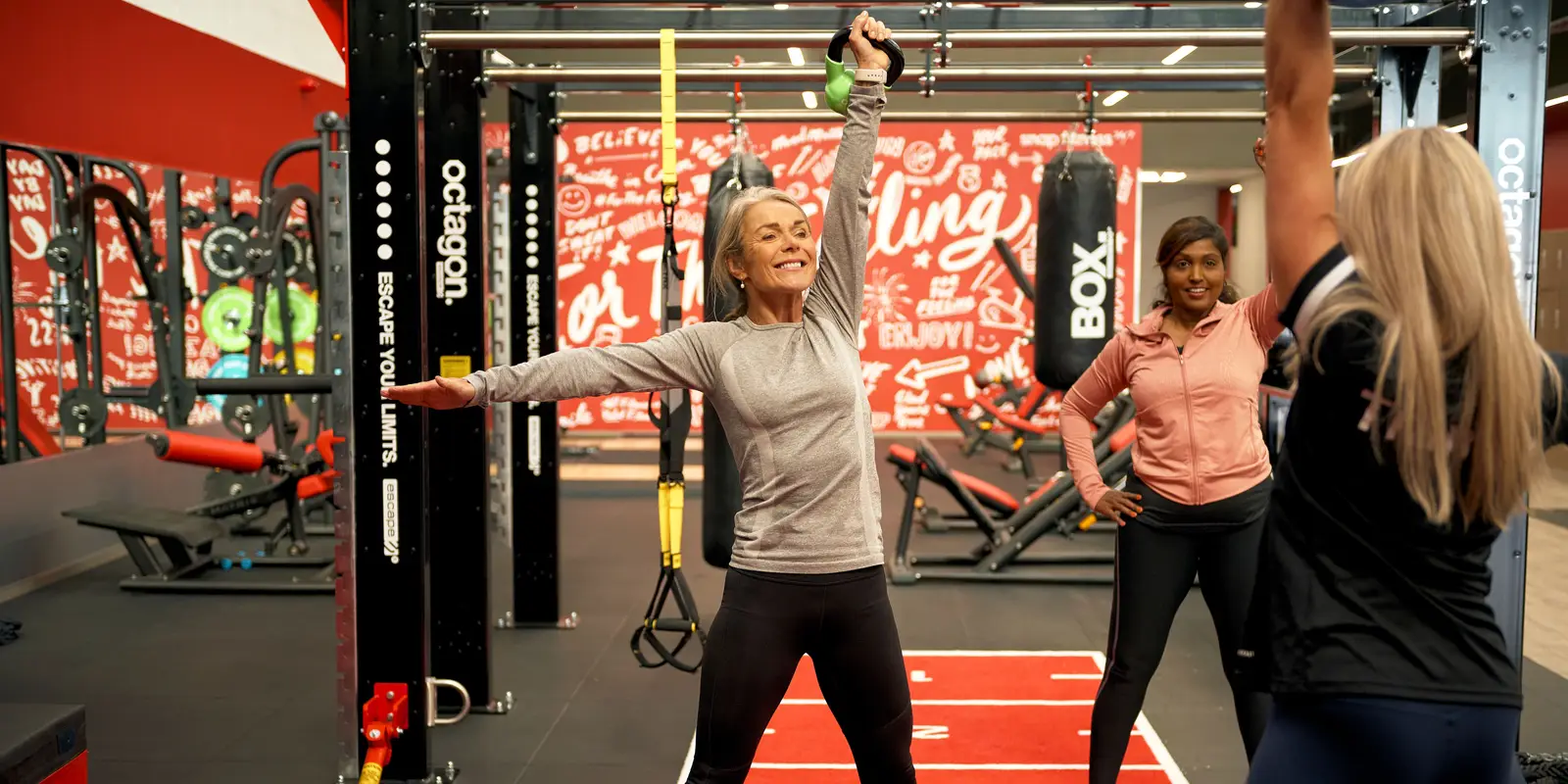
High-intensity interval training (HIIT) alternates harder efforts with recovery periods. The phrase “for anyone” can be misleading: a fast circuit with burpees, jumps, weights, and rowing may not suit every body, experience level, or health situation. The plan below keeps the original full-body idea but adds lower-impact options and leaves room to choose an effort that is appropriate for you.
This is general fitness information, not a personal training prescription. If you have a chronic condition, recent injury, balance concern, pregnancy-related question, or symptoms during activity, ask a qualified healthcare professional about suitable exercise. You can also choose steady, moderate movement instead of HIIT.
Check intensity before you start
Intensity is relative. The CDC describes moderate activity as a level where you can talk but not sing; during vigorous activity, you can say only a few words before pausing for breath.[1] On a 0-to-10 effort scale, moderate activity is often around 5 or 6, while vigorous activity begins around 7 or 8.[1] These are ways to describe effort, not medical tests.
For a first session, keep the effort comfortable enough to maintain control. You do not need to sprint or reach an all-out effort. If you are returning after a long break, start with easier movement and fewer rounds. The federal guidelines advise inactive adults to build up gradually rather than jumping immediately to a demanding routine.[2]
Warm up and set up
Choose a clear, nonslip space with room to step in every direction. Place a stable chair or wall nearby if you want support. Use weights you can lift and lower with control, and secure a rowing machine before using it. A brief warm-up can include easy walking, gentle marching, or cycling at a comfortable pace. Start with a few practice repetitions of the movements without weight.
Stop if you feel sharp pain, chest pressure, faintness, sudden weakness, or unusual shortness of breath. MedlinePlus recommends warming up, increasing exercise gradually, and responding to pain rather than pushing through it.[3] If a symptom is severe or does not settle, seek appropriate medical care.
Five movement stations
Use the versions that suit your current ability. One sample session is 20 seconds of easy-to-moderate movement followed by 40 to 60 seconds of rest or very easy movement at each station. Complete one or two rounds at first. This timing is a starting example, not a requirement. Rest longer whenever needed, and stop the session if your form changes or symptoms appear.
### 1. Step-back squat thrust
The source version is a burpee with a plank, push-up, and jump. That combination can be demanding. For a lower-impact option, stand behind a sturdy bench or chair, sit back into a comfortable squat or sit-to-stand, then step one foot back and forward at a time without going to the floor. Use the chair for balance only if it is stable.
If you already practice floor burpees and can do them comfortably, you can use a step-back plank without the push-up or jump. Keep the movement controlled. You do not need to move quickly to make the exercise count. Skip this station if getting down or up from the floor is difficult or unsafe.
### 2. Supported two-arm row
Use a light pair of dumbbells or kettlebells. Stand with feet comfortable and hinge only as far as you can keep your back in a position that feels steady. You can support one hand on a stable bench and row with the other arm. Pull the weight toward your lower ribs, then lower slowly.
Avoid swinging the torso or lifting a weight that pulls you out of position. If hinging is uncomfortable, perform a seated resistance-band row with the band anchored securely. If you do not have suitable equipment, substitute a different comfortable movement rather than using an unstable object.
### 3. Press variation
The original workout uses an overhead kettlebell press. If overhead movement feels comfortable, begin with a light load and press only through a controlled range. Keep your torso steady and lower the weight slowly. Do not arch your back to push the load higher.
A wall push-up or incline push-up is an alternative that does not require lifting a weight overhead. Place your hands on a stable wall or counter, keep your body aligned, and bend your elbows only as far as you can control. Choose one variation, not both, if fatigue is building.
### 4. Squat or sit-to-stand
Stand with feet about hip-width apart, use a chair behind you if helpful, and bend your hips and knees only through a comfortable range. You can tap the chair and stand again, or simply practice rising from a stable chair. Keep the movement smooth and use your hands for support if needed.
Jump squats are optional and not necessary for a full-body session. If you are already comfortable with them, land softly and stop before fatigue affects balance. People with joint pain, balance concerns, or limited impact tolerance can use the non-jumping version or choose another movement recommended by a professional.
### 5. Rowing or marching
If you use a rowing machine, begin at an easy pace and learn the sequence: push with the legs, then lean back slightly, then draw the handle toward the torso; reverse the steps to return. Keep the lower back comfortable and avoid pulling hard with the arms alone. Follow the machine instructions and adjust foot straps securely.
If a rower is unavailable or does not suit you, march gently in place, walk in a corridor, or use a seated marching option. Do not chase a fixed distance or speed. The goal of this station is simply to include a movement that raises effort within a range you can manage.
Adjust the circuit to your day
Start with one round and pause between stations. If you feel steady and the talk test still fits your chosen effort, continue. You can add time or a round in a later session, but do not increase every part of the workout at once. If you are unsure whether your effort is moderate or vigorous, slow down and use the talk test as a rough guide.[1]
You can also make the session a moderate interval workout instead of HIIT. Keep the movements low impact, rest more, and choose a pace that allows you to speak in sentences. Some days a brisk walk or steady cycling may be a better fit. No workout must be completed exactly as written.
Cool down and reflect
Finish with a few minutes of easy movement, then let breathing return toward your usual level. Gentle stretching is optional; do not force a range or hold a painful position. Drink according to your needs and any care instructions you follow. Note which options felt stable and which ones you would change next time.
A workout should not leave you needing to prove you can tolerate pain. If you feel sharp pain, dizziness, chest discomfort, or severe shortness of breath, stop. If you have symptoms that concern you or do not settle, contact a healthcare professional.[3] With training, consistency and a suitable effort matter more than completing the highest-impact version of a circuit.
Keep the goal realistic
This five-station circuit is one way to combine lower-body, upper-body, and aerobic movements. It is not a guaranteed route to fat loss, a faster metabolism, or a specific fitness result. Pick variations that match your equipment and abilities, and seek individualized instruction when you need it. A version you can perform safely is the right place to begin.
Sources and further reading
- How to Measure Physical Activity IntensityCenters for Disease Control and Prevention · Accessed 2026-11-03
- Physical Activity Guidelines Questions & AnswersU.S. Department of Health and Human Services, Office of Disease Prevention and Health Promotion · Accessed 2026-11-03
- How to avoid exercise injuriesMedlinePlus, U.S. National Library of Medicine · Accessed 2026-11-03