Recipes • Fitness Well
Chickpea, Sweet Potato, and Spinach Curry
A flexible one-pan curry with chickpeas, sweet potato, spinach, coconut milk, and adjustable spice.
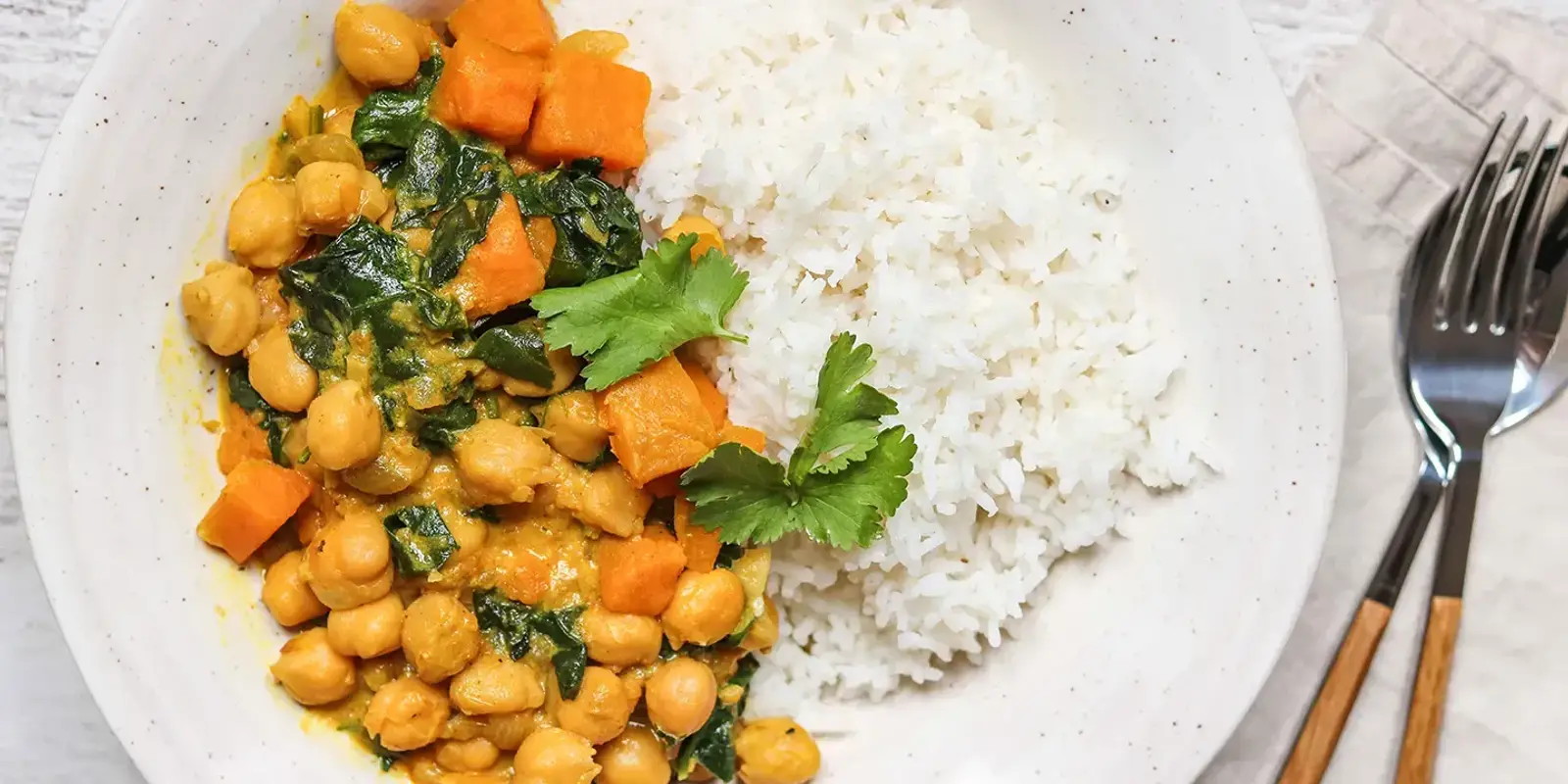
This chickpea, sweet potato, and spinach curry is a one-pan dinner built around pantry staples and a few fresh ingredients. It makes about four servings, depending on portion size, and pairs well with rice, flatbread, or another grain. The recipe is flexible: adjust the chili, use the coconut milk you prefer, and cook the sweet potato until it is tender rather than relying only on the clock.
Ingredients
- 1 tablespoon neutral oil
- 1 medium onion, chopped
- 1-inch (about 3 cm) piece of fresh ginger, grated
- 2 garlic cloves, minced
- ½ fresh chili, finely chopped, or less to taste
- 1 medium sweet potato, peeled and cut into small cubes
- ½ teaspoon ground turmeric
- ½ teaspoon paprika
- ¼ to ½ teaspoon ground chili or cayenne, optional
- ⅔ cup (150 ml) vegetable broth
- 1 cup (250 ml) canned coconut milk
- 1 can chickpeas, about 14 ounces (400 g), drained and rinsed; reserve a little liquid if you want a thinner sauce
- About 3 cups loosely packed chopped spinach (roughly 100 g)
- Salt and black pepper, to taste
- Rice or flatbread, for serving
Prepare the ingredients
Chop the onion and sweet potato before heating the pan. Cut the potato into evenly sized, small cubes so the pieces cook at a similar rate. Grate the ginger, mince the garlic, and chop the chili. If you are sensitive to heat, remove the seeds or use only a small amount.
If using fresh spinach, rinse it under running water and dry it before chopping. The FDA recommends washing fresh produce under running water and does not recommend soap or detergent.[1] Canned chickpeas are already cooked; draining and rinsing them can reduce the salty canning liquid in the finished dish. If you want a looser curry, keep a few tablespoons of that liquid or use extra broth.
Cook the curry
- Warm the oil in a deep skillet or saucepan over medium heat. Add the chopped onion and cook for 3 to 4 minutes, stirring occasionally, until it begins to soften.
- Add the ginger, garlic, and fresh chili. Stir for about 1 minute, just until fragrant. If the garlic begins to brown quickly, lower the heat.
- Add the sweet potato cubes, turmeric, paprika, optional ground chili, and a pinch of salt. Stir until the pieces are coated in the spices.
- Pour in the broth and coconut milk. Add the drained chickpeas and stir. Bring the mixture to a gentle simmer, then reduce the heat so it bubbles lightly.
- Cook uncovered for about 15 minutes, stirring every few minutes. Check a sweet potato cube with a fork. If it is still firm, continue simmering and add a splash of broth or water if the pan looks dry.
- When the sweet potato is tender, stir in the spinach. Cook for 1 to 2 minutes, just until the leaves wilt. Taste the sauce and adjust salt, pepper, or chili.
- Spoon into bowls and serve with cooked rice or flatbread.
How to adjust the flavor
For a mild curry, omit the fresh chili and use paprika without cayenne. For more heat, add a small amount of chili at a time and taste after it simmers. A squeeze of lemon or lime at the end can brighten the sauce. If it tastes too sharp, add a little more coconut milk or broth rather than more salt.
Coconut milk varies by brand and can separate in the can. Stir it before measuring. Full-fat coconut milk gives a richer sauce; a lighter version may make it thinner. If the curry is too thin, simmer uncovered for a few more minutes. If it becomes too thick before the sweet potato softens, add broth or water a few tablespoons at a time.
Ingredient swaps
Use frozen spinach if fresh is unavailable; add it near the end and cook until hot. Kale can replace spinach, but it may need a few extra minutes to soften. You can swap the sweet potato for peeled squash or regular potato, cut into similar pieces, and adjust cooking time until tender.
If you do not have vegetable broth, water works; season gradually at the end. For a different protein, cooked lentils can replace chickpeas. If you use a different canned bean, drain and rinse it, then check the texture during simmering so it does not break down too much.
The heat level and salt content depend on the broth, canned beans, and chili you choose. Taste before adding more seasoning. If cooking for a group, serve extra chili or hot sauce on the side so each person can adjust their bowl.
Make it a meal
Serve the curry over rice, with flatbread, or alongside another grain. Cook rice according to its package directions in a separate pot while the curry simmers. For an easy serving plan, divide the cooked rice and curry among bowls and add a spoonful of yogurt or chopped herbs if desired. Keep optional toppings separate for people who prefer a simpler bowl.
If you are planning lunches, portion the curry into individual containers after cooking. Cool and refrigerate leftovers promptly. FoodSafety.gov advises refrigerating perishable foods within two hours, or within one hour when the temperature is above 90°F (32°C), and keeping the refrigerator at 40°F (4°C) or below.[2] Reheat leftovers until steaming hot throughout, adding a little water if the sauce has thickened.
Troubleshooting
If the sweet potato is still firm after 15 minutes, keep simmering and test again. Cube size, pan shape, and stove heat affect cooking time. If the sauce reduces before the potato is tender, add more broth and lower the heat. If the chickpeas start to break apart, stir more gently and reduce the simmer.
If the curry tastes flat, check salt first, then add a little acid such as lemon juice. If it is too spicy, add coconut milk or serve it with plain rice or yogurt. If you want a thicker sauce, mash a few chickpeas or sweet potato cubes against the side of the pan and stir them back in.
Store and reheat
Transfer leftovers to shallow, covered containers and refrigerate promptly. Use refrigerated leftovers within three to four days, or freeze portions for longer storage. Thaw frozen portions in the refrigerator, then reheat on the stove or in a microwave until hot throughout. Add a splash of water or broth to loosen the sauce as needed.
This curry is intended as a flavorful meal, not a treatment or “detox.” It is easy to adapt to your pantry and taste preferences. Cut the vegetables evenly, simmer until tender, add spinach at the end, and adjust the seasoning before serving.
Prep ahead without overcooking
You can chop the onion, ginger, garlic, chili, and sweet potato earlier in the day and keep them covered in the refrigerator. Keep the spinach separate so it stays dry, and open the chickpeas when you are ready to cook. Measure the spices into a small dish to make the cooking sequence easier. Start rice when the curry begins to simmer so both are ready around the same time. If you make the curry ahead, the sweet potato may soften further during reheating, so warm it gently and stir carefully. Add a splash of broth if the sauce has thickened. Add fresh spinach during reheating only long enough to wilt it.
Sources and further reading
- Selecting and Serving Produce SafelyU.S. Food and Drug Administration · Accessed 2026-11-03
- 4 Steps to Food SafetyFoodSafety.gov · Accessed 2026-11-03