Recipes • Fitness Well
Chicken and Quinoa Bowl with Roasted Vegetables
A four-serving chicken and quinoa bowl with roasted vegetables, chickpeas, fresh toppings, and meal-prep storage guidance.
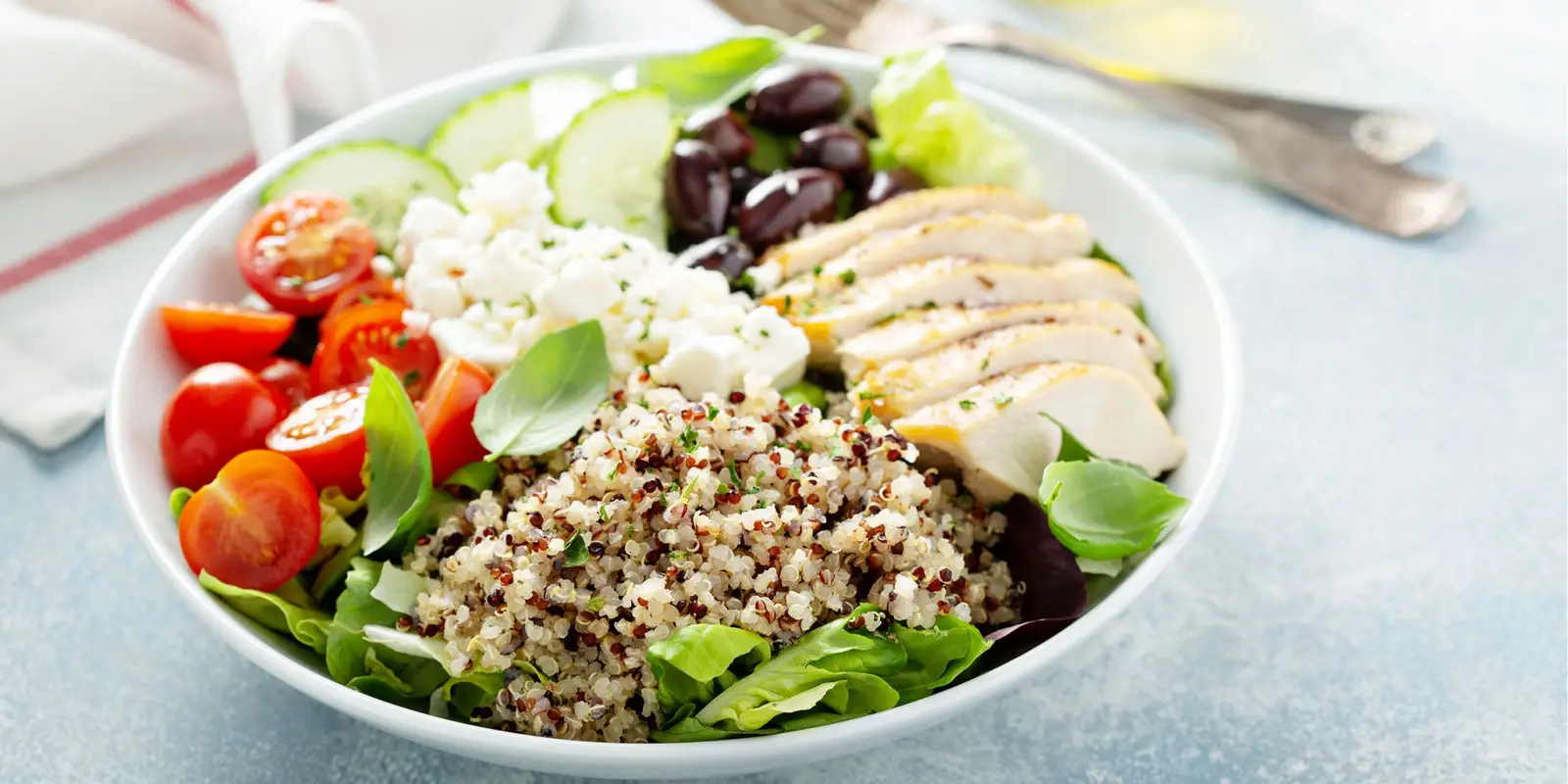
This chicken and quinoa bowl combines a grain, chicken, roasted vegetables, chickpeas, and fresh toppings. It makes four servings and can be assembled warm or chilled for lunch. The ingredients are flexible; choose vegetables and sauce that fit your taste, budget, and cooking time.
The source article makes broad nutrition claims about quinoa, chicken, and weight management. This version focuses on preparing a satisfying meal and does not promise a particular health outcome.
Ingredients
### Quinoa
- 1 cup dry quinoa
- 2 cups water or vegetable broth
- Pinch of salt, optional
### Chicken and roasted vegetables
- 1 pound (450 g) boneless chicken breast
- 1 small red onion, sliced
- 1 bell pepper, sliced
- 1 can chickpeas, about 15 ounces (425 g), drained and rinsed
- 2 cups chopped kale
- 1 tablespoon olive oil
- 1 teaspoon dried oregano
- ½ teaspoon garlic powder or 1 minced garlic clove
- Juice of ½ lemon
- Black pepper, to taste
### Fresh toppings
- 1 cup cherry tomatoes, halved
- ½ cucumber, diced
- Tzatziki or hummus, for serving
Cook the quinoa
Rinse quinoa if the package directions recommend it. Add quinoa, water or broth, and optional salt to a saucepan. Bring to a boil, lower the heat, cover, and simmer according to the package directions, usually until the liquid is absorbed. Remove from heat and let stand covered for several minutes. Fluff with a fork.
If liquid remains, drain it. If the grains are still firm, add a small amount of water and cook a little longer. Spread the quinoa in a shallow dish if you want it to cool quickly for meal prep.
Prepare the chicken and vegetables
Heat the oven to 425°F (220°C). Line a sheet pan with parchment or lightly oil it. Pat chicken dry with a paper towel. In a small bowl, combine olive oil, oregano, garlic, lemon juice, and black pepper. Brush or rub the mixture over the chicken. Keep the brush and plate used for raw chicken separate from ready-to-eat vegetables.
Place the chicken on one side of the pan and spread onion and bell pepper around it. Roast for about 15 to 20 minutes, depending on thickness. Check the thickest part of the chicken with a food thermometer. CDC advises cooking chicken to 165°F (74°C).[1] If it has not reached that temperature, return it to the oven and check again after a few minutes. Do not rely only on color.
When chicken is cooked, transfer it to a clean plate and let it rest briefly. Add the chickpeas and kale to the vegetables, toss carefully, and return the pan to the oven for about 5 minutes until the kale softens and the chickpeas are hot. If the vegetables are already tender, skip the extra roasting and stir the greens into the warm pan instead.
Assemble the bowls
Divide quinoa among four bowls. Slice or shred the cooked chicken and add it with the roasted vegetables and chickpeas. Top with tomatoes and cucumber. Add a spoonful of tzatziki or hummus, or serve the sauce on the side.
For a warm bowl, add the fresh toppings right before eating. For a packed lunch, cool the cooked ingredients and keep the sauce and fresh vegetables separate. This helps preserve texture and makes it easier to adjust toppings.
Make the recipe your own
Use zucchini, broccoli, carrots, or another vegetable in place of bell pepper. Cut vegetables to similar sizes so they cook at a similar pace. If using a vegetable that cooks quickly, add it later so it does not over-soften. You can substitute canned lentils or black beans for chickpeas; drain and rinse canned legumes before using.
If you do not eat chicken, use firm tofu or another protein food. Cook it separately according to the package directions and use a clean surface. A plant-based swap will change the texture, so adjust seasoning to taste. For a dairy-free bowl, choose hummus or a dairy-free sauce instead of tzatziki.
Meal prep and storage
To prepare ahead, cook the quinoa and chicken, roast the vegetables, and portion them into containers. Keep cucumber, tomatoes, and sauce separate until serving. Refrigerate perishable food within two hours of cooking, or within one hour if the temperature is above 90°F (32°C).[2] Keep the refrigerator at 40°F (4°C) or below.
Use cooked chicken and leftovers within three to four days, or freeze portions for longer storage.[2] Reheat leftovers until steaming hot throughout; use a food thermometer if you are unsure. Do not put cooked chicken back on a plate that held raw chicken. Wash hands, utensils, and surfaces after handling raw poultry.
Troubleshooting
If quinoa is gummy, use the water ratio and cook time on the package, then let it rest covered before fluffing. If chicken browns before it reaches 165°F, lower the oven temperature and continue cooking. If vegetables release liquid, spread them across a larger pan so they roast rather than steam.
If the bowl tastes flat, add lemon, herbs, or a sauce at the end. If it tastes too salty, add more quinoa or vegetables rather than adding more seasoning. Keep toppings separate when preparing multiple servings so each bowl can be adjusted individually.
A flexible meal-prep bowl
This recipe can be adapted to different schedules and preferences. Cook the grain and protein once, then vary vegetables and sauces through the week. It is not a prescribed nutrition plan; choose ingredients that work for your household and any dietary guidance you follow. Store and reheat the chicken safely, and enjoy the bowl warm or cold.
Season and cook with flexibility
The lemon, oregano, and garlic mixture is a quick seasoning, not a long marinade. If you want to prep ahead, coat the chicken and refrigerate it in a covered container until you are ready to roast. Keep the raw poultry on the lowest refrigerator shelf and away from ready-to-eat ingredients. Use a separate board for cutting vegetables. CDC advises keeping raw chicken and its juices away from foods that will not be cooked.[1]
If you do not have a sheet pan, cook the chicken in a skillet and roast or sauté the vegetables separately. Cook the chicken until a thermometer reads 165°F in the thickest part. Let it rest on a clean plate before slicing. If the chicken pieces are uneven, arrange thinner pieces toward the edge of the pan and check them earlier so they do not dry out while thicker pieces finish.
Vary the bowl through the week
Use the same base in different ways. Serve quinoa and roasted vegetables warm one day, then layer cooled ingredients over greens another day. Put the chicken and chickpeas into a wrap with a little sauce, or serve them beside roasted potatoes. If you want a different flavor, use lemon and herbs for one meal and a mild spice blend for the next. Keep sauces separate so the ingredients remain distinct.
You can also change the grain. Brown rice, farro, or couscous can replace quinoa if that suits your pantry. Follow the package cooking instructions and cool any cooked grain promptly if storing it. Choose a batch size that fits the number of people you are feeding; there is no need to prepare four portions if you will not use them safely within a few days.
Pack and reheat thoughtfully
Use containers that seal and fit one meal. Let hot ingredients cool briefly, then refrigerate them promptly rather than leaving the pan out while you complete other tasks. Add raw vegetables and sauce after reheating. Stir or rotate food in the microwave so it heats evenly, and check that the center is hot before eating. If the texture becomes dry, add a little sauce or water after reheating.
Sources and further reading
- Chicken and Food PoisoningCenters for Disease Control and Prevention · Accessed 2026-11-03
- 4 Steps to Food SafetyFoodSafety.gov · Accessed 2026-11-03