Fitness • Fitness Well
Biceps and Triceps Workout: Eight Moves with Safer Options
A menu of four biceps and four triceps movements with beginner modifications, setup guidance, and gradual progression.
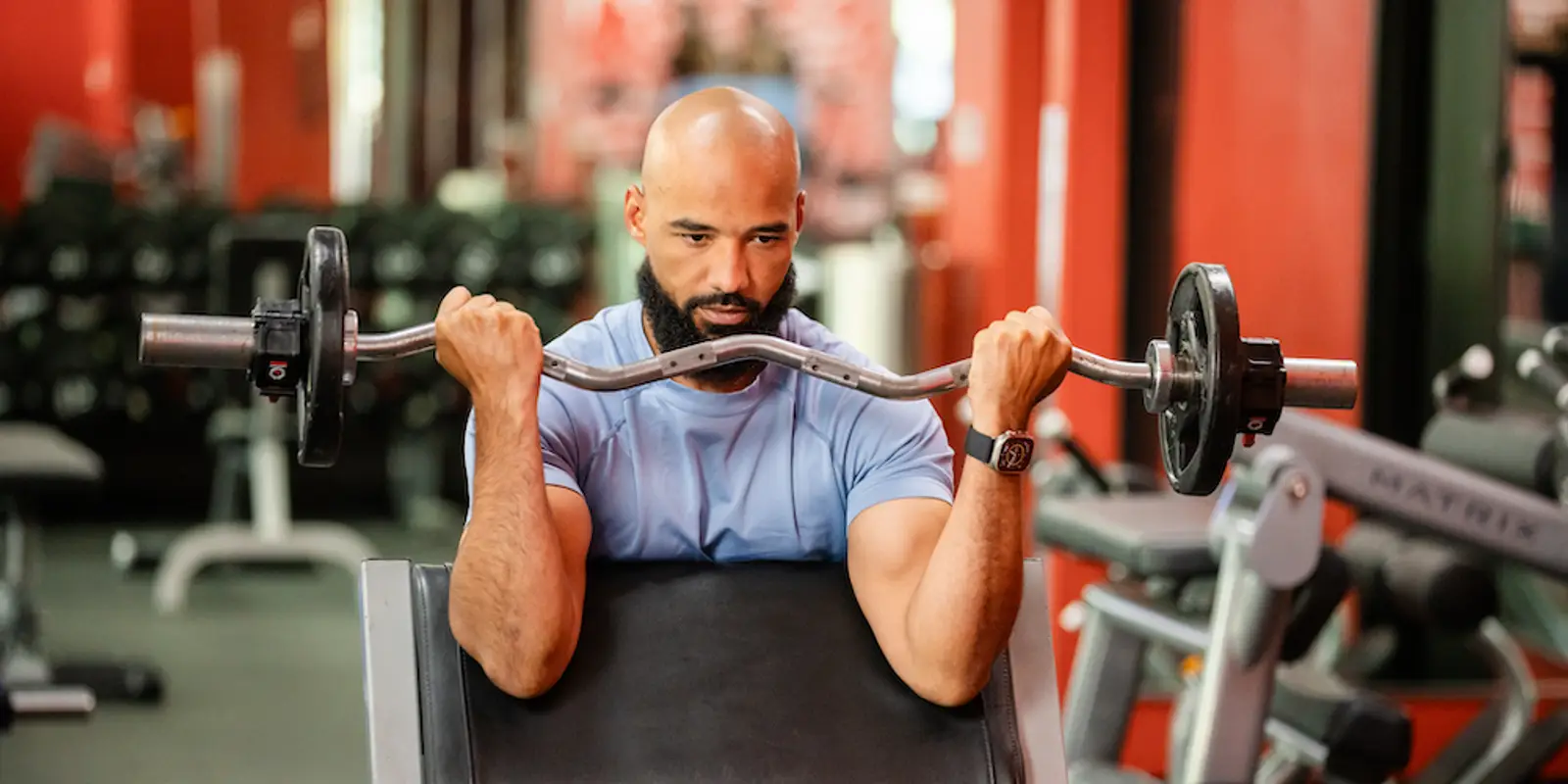
Biceps and triceps help bend and straighten the elbow. A balanced arm session can include both pulling and pushing patterns, but you do not need eight exercises in one workout. The movements below are a menu: choose a few that fit your equipment and experience, then add or change exercises gradually.
This is general strength-training information, not a personal program. If you have an elbow, wrist, or shoulder injury, a chronic condition, or pain during exercise, ask a healthcare professional which movements are appropriate. Stop any exercise that causes sharp pain or numbness.
Warm up and choose a manageable load
Begin with a few minutes of easy movement, such as walking or arm circles. If you use a resistance band, inspect it for cracks and secure the anchor according to the product instructions. Start with a light weight that lets you lift and lower without swinging or holding your breath.
MedlinePlus recommends warming up, increasing exercise gradually, and responding to pain rather than pushing through it.[1] You do not need a heavy load or a long warm-up to begin. Practice each movement slowly before adding weight.
Biceps options
### 1. Hammer curl
Stand or sit with a dumbbell in each hand and palms facing inward. Keep elbows near your sides and bend them to bring the weights toward your shoulders. Lower slowly. If lifting both arms together feels difficult, alternate sides or use one lighter weight.
### 2. Seated concentration curl
Sit on a stable chair with feet flat. Hold one light dumbbell with palm facing up. Rest the upper arm lightly against the inside of the thigh and curl the weight toward the shoulder. Keep the movement controlled and avoid pressing hard into the leg. Switch sides.
### 3. Resistance-band curl
Stand on the middle of a resistance band with feet stable and hold one end in each hand. Keep elbows near your torso and curl the hands upward, then lower slowly. Use a band with light resistance and keep it underfoot securely. If the band slips or feels damaged, stop and choose another exercise.
### 4. Barbell or cable curl
Hold a light bar or cable handle with palms facing forward. Keep shoulders relaxed and elbows close to your sides. Bend the elbows to raise the handle, then lower under control. Do not rock your body to lift more weight. Ask staff to show you the cable setup if you are unfamiliar with the machine.
Triceps options
### 5. Cable or band pushdown
Attach a cable handle or exercise band above you using a secure anchor. Stand with elbows near your sides. Straighten your arms downward, then return slowly without letting the band snap back. If you cannot verify the anchor, do not use it.
### 6. Seated overhead extension
Sit with back support and hold a light dumbbell with both hands. Bring it above or just behind your head only if the shoulder position is comfortable. Bend the elbows to lower the weight a small distance, then straighten them. Keep your torso steady and avoid arching your back. A band pressdown or wall push-up may be an easier alternative.
### 7. Close-grip wall or incline push-up
Place hands slightly narrower than shoulder-width against a wall or stable counter. Keep your body aligned and bend your elbows to bring your chest closer, then press away. A wall is an easier option; a lower incline is more demanding. Do not force a narrow hand position if it bothers your wrists.
### 8. Supported triceps kickback
Brace one hand on a stable bench or chair and hold a light dumbbell in the other. Hinge slightly at the hips, keep the upper arm near your side, and straighten the elbow to move the weight behind you. Return slowly. If hinging is uncomfortable, sit and use a light band pressdown instead.
Put the exercises together
For a first session, choose one biceps movement and one triceps movement. Try a comfortable number of controlled repetitions, rest, and see how your arms feel. If the session remains manageable, you can add a second set or another movement on a later visit. The routine does not need three rounds of every exercise.
If you enjoy supersets, alternate one biceps exercise with one triceps exercise, then rest. A superset is optional and may feel tiring because it shortens recovery. If your technique changes, increase the rest or perform the exercises separately.
Progress without rushing
Use a simple log if it helps: exercise, weight or band, repetitions, and how the movement felt. When a weight feels easy and your form stays controlled across sessions, increase resistance slightly or add a few repetitions—not both at once. You can also keep the same load and improve control.
Do not train the same muscles hard every day. Give yourself time between challenging sessions, and choose an easier activity if your arms are unusually sore. Strength training is one component of a broader routine; adults are also encouraged to include aerobic activity and work major muscle groups across the week.[2]
Avoid common setup problems
Do not use a loose chair for dips or a door frame as a band anchor. Avoid letting weights swing, locking elbows forcefully, or holding your breath. Use a bench that does not move and keep the training area clear. If you need help adjusting a machine, ask a qualified trainer or gym staff member.
Keep the goal realistic
Arm training can build practice and strength over time, but no eight-move routine guarantees a particular arm size, body composition, or timeline. Choose exercises you can perform safely and enjoy. If your goal is specific—such as returning after an injury or improving sport performance—ask a qualified professional to tailor the plan.
Choose a routine that fits your experience
A short beginner session can be two movements: a hammer curl and a wall push-up. If you want more variety, add a band curl and a supported pressdown. You do not need to complete all eight exercises. The concentration curl and kickback provide alternatives when you want to train one arm at a time; cable and band versions depend on having a secure setup.
For an experienced lifter, the eight movements can be used across more than one workout rather than packed into a single session. For example, use one curl and one triceps exercise on one day, then choose different variations later in the week. This avoids repeating the same elbow motion in every set and leaves time for other muscle groups. A qualified trainer can help structure a plan around your goals and schedule.
Use cues that protect control
Keep the wrists in a comfortable position and move through a range that does not pinch the shoulder or elbow. During curls, keep the upper arm mostly still. During pushdowns or extensions, let the elbow bend and straighten without forcing it to lock. Lower weights more slowly than you lift them if that helps you stay in control. If you need to lean, swing, or hold your breath, reduce the resistance.
The arms contribute to many daily tasks, but this article cannot promise that a particular exercise will improve joint health or prevent injury. If an exercise causes pain that returns each time, stop and ask a healthcare professional or physical therapist for guidance. You can maintain a routine with another movement while you clarify what is appropriate.
Sources and further reading
- How to avoid exercise injuriesMedlinePlus, U.S. National Library of Medicine · Accessed 2026-11-03
- Adult Activity: An OverviewCenters for Disease Control and Prevention · Accessed 2026-11-03