Recipes • Fitness Well
Banana, Walnut, and Dark Chocolate Muffins
A 12-muffin recipe with whole-wheat flour, ripe bananas, walnuts, and dark chocolate, plus vegan and gluten-free options.
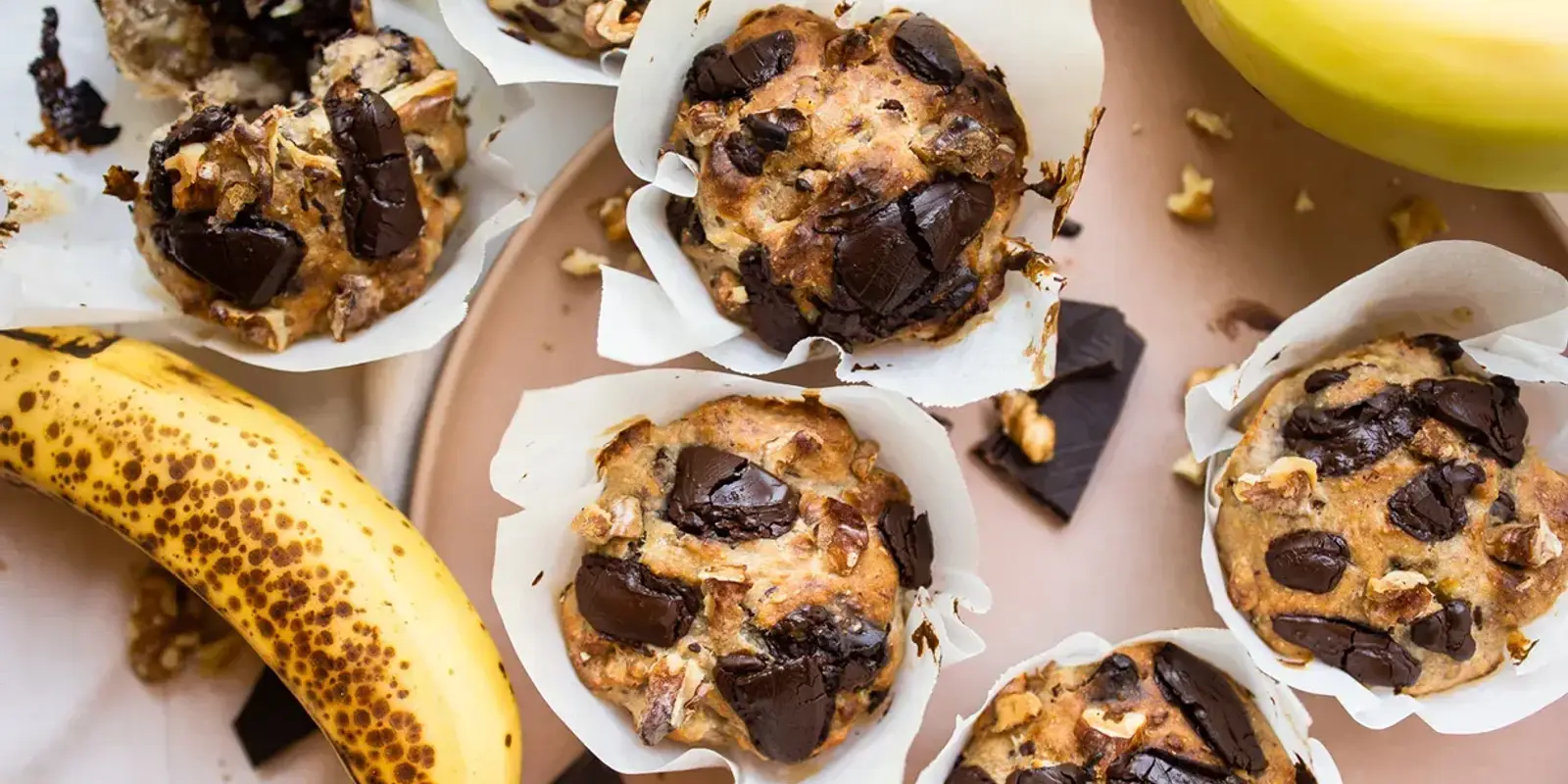
These banana, walnut, and dark chocolate muffins are a simple make-ahead bake with ripe bananas and pantry ingredients. The recipe makes 12 standard muffins. It uses whole-wheat flour, maple syrup, milk, olive oil, walnuts, and chopped dark chocolate. The original source describes cocoa and banana as mood-boosting; this version keeps the focus on flavor and baking, without promising a health effect.
Ingredients
- 200 g whole-wheat flour, about 1⅔ cups (weighing is more precise)
- 2 teaspoons baking powder
- ½ teaspoon baking soda
- A pinch of salt
- 2 large ripe bananas
- ¼ cup (59 ml) maple syrup
- ½ cup (118 ml) milk or unsweetened plant-based milk
- 1 tablespoon olive oil
- 1 teaspoon vanilla extract
- ⅓ cup (about 43 g) chopped walnuts
- 3½ ounces (100 g) chopped dark chocolate, about ⅔ cup depending on the pieces
Before you begin
Heat the oven to 350°F (180°C). Line a 12-cup muffin pan with paper liners or grease it lightly. Set out two bowls, a fork or potato masher, a whisk, and a spatula. Check that the bananas are soft enough to mash. If they are still firm, let them ripen longer or mash them thoroughly so the batter does not contain large dry chunks.
Measure the flour by weight when possible. If using cups, spoon flour into the measuring cup and level it rather than packing it down. Too much flour can make muffins dry and dense. Chop the walnuts and chocolate into small, fairly even pieces so they distribute through the batter.
Mix the dry and wet ingredients
In a large bowl, whisk together the flour, baking powder, baking soda, and salt. This spreads the leavening through the flour and helps avoid concentrated pockets in the finished muffins.
In a second bowl, mash the bananas with a fork until mostly smooth. Stir in the maple syrup, milk, olive oil, and vanilla. Pour the wet mixture into the dry ingredients. Fold gently with a spatula until no large dry patches remain. The batter can look slightly lumpy. Avoid beating it until perfectly smooth; overmixing can make the texture tougher.
Fold in the chopped walnuts and chocolate. If you want visible pieces on top, reserve a small spoonful of each before mixing. Divide the batter among the 12 muffin cups, filling each about two-thirds full. Sprinkle the reserved pieces over the tops if desired.
Bake and cool
Bake for 20 to 25 minutes, checking near the lower end of the range. Ovens vary. The tops should look set and spring back lightly when touched. Insert a toothpick in the center of one muffin; it should come out without wet batter. Melted chocolate on the toothpick is fine, so test a spot without a chocolate chunk if needed.
Use oven mitts to remove the pan. Let the muffins rest in the pan for several minutes, then transfer them to a rack to cool. If you try to remove them immediately, a soft muffin may break. Letting them cool also helps the crumb finish setting.
Do not taste raw batter. Raw flour can contain germs that are killed during baking, and the CDC advises against eating raw dough or batter.[1] Wash hands, bowls, utensils, and counters after handling the flour mixture.
Vegan and gluten-free options
For a vegan version, choose plant-based milk and check that the dark chocolate contains no milk ingredients. The recipe does not use eggs or butter, but packaged chocolate and plant milks can have different ingredients. Read labels each time you buy them.
For a gluten-free version, replace the whole-wheat flour with a gluten-free all-purpose baking blend designed as a cup-for-cup substitute. Results can vary between blends, so follow the package directions. Check that the baking powder, chocolate, and other ingredients meet your needs. If you have celiac disease or a serious allergy, avoid cross-contact from shared equipment and surfaces.
Walnuts are tree nuts, and wheat and milk are also major food allergens.[2] Omit walnuts only if that substitution is safe for everyone eating the muffins. You can leave them out for a smoother texture; the batter does not require a replacement. If you use a substitute, check its label and consider how it changes the taste and texture.
Flavor variations
A small amount of cinnamon or orange zest can complement banana and chocolate. You can also use pecans instead of walnuts if that is safe for the people eating them. Keep additions modest so the batter still fits the muffin cups. Extra fruit or wet ingredients can change baking time and texture, so add them gradually and check the centers before removing the pan.
For a less sweet result, use chocolate with a higher cocoa percentage or reduce the chocolate slightly. Maple syrup contributes sweetness and moisture, so large reductions may make the muffins less tender. Change one ingredient at a time the first time you adapt the recipe, and note what worked for your oven and flour.
Storage and serving
Let muffins cool before storing so steam does not collect inside the container. Because this recipe uses milk and moist fruit, refrigerate leftovers in a covered container and use them within three to four days. FoodSafety.gov advises refrigerating perishable food within two hours, or within one hour when the temperature is above 90°F; keep the refrigerator at 40°F or below.[3] If you will not eat them within a few days, freeze them in a sealed freezer-safe container and label the date.
To serve, thaw a frozen muffin in the refrigerator or warm it briefly in the microwave. Check that the center is warm but not too hot. You can also serve the muffins at room temperature with fruit or yogurt. The recipe makes 12 portions, so freeze some individually if you want an easy snack later.
Troubleshooting
If the muffins are dry, check that the flour was not packed into the cup and avoid baking past the point when the centers are set. If the middle is wet while the tops are brown, lower the oven temperature slightly next time and bake a little longer, checking with a toothpick. If the muffins stick, use liners or grease the pan and let them cool before lifting them out.
If the batter seems unusually thick, first check your flour measurement and banana size. Bananas vary in size and moisture. A tablespoon of additional milk can loosen a very stiff batter, but add it gradually. If the batter seems thin, do not add a large amount of flour at once; bake a test muffin or allow the flour a few minutes to absorb the liquid before deciding whether to adjust.
A simple make-ahead bake
These muffins are intended as a convenient baked snack, not a treatment for mood, digestion, or energy. Use ingredients that fit your preferences and any dietary guidance you follow. Prepare the pan before mixing, measure carefully, fold the batter gently, and check doneness in the center. With those basics, the recipe is easy to repeat and adapt.
Freeze portions for later
Once fully cool, wrap muffins individually or separate layers with parchment in a freezer-safe container. Write the date and flavor on the container so it is easy to identify later. Thaw only the number you plan to eat. If the surface becomes damp after thawing, warm the muffin briefly or let it sit uncovered for a few minutes. Avoid leaving a large container open on the counter while you prepare the rest; return the remaining muffins to cold storage promptly.
Sources and further reading
- No Raw Dough or BatterCenters for Disease Control and Prevention · Accessed 2026-11-03
- Food Allergies: What You Need to KnowU.S. Food and Drug Administration · Accessed 2026-11-03
- 4 Steps to Food SafetyFoodSafety.gov · Accessed 2026-11-03