Fitness • Fitness Well
A Lower-Body Workout You Can Adapt at Home
A low-equipment lower-body circuit with chair, supported, and floor-free variations for different starting points.
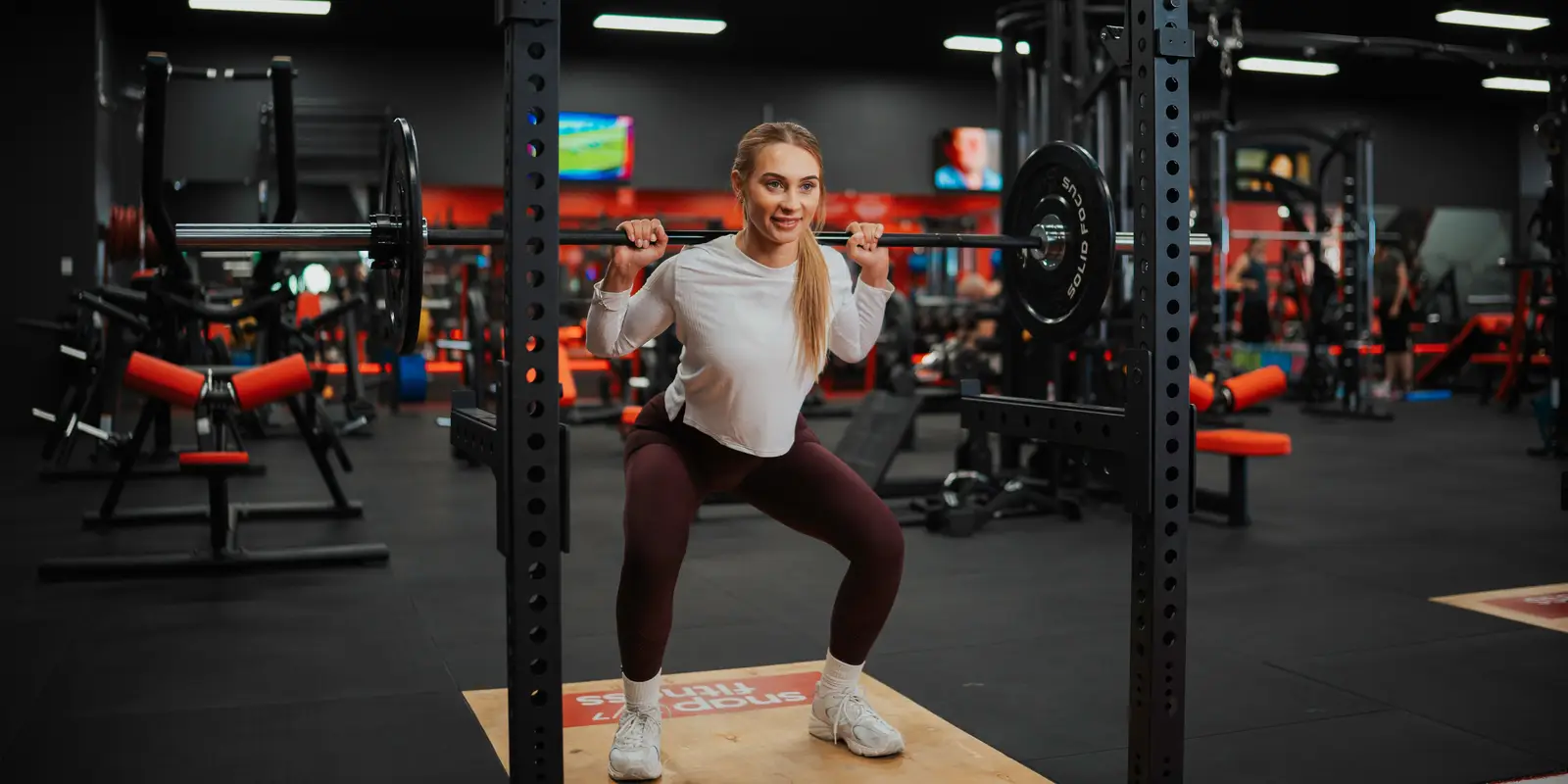
A lower-body workout can be done at home with little equipment, but “anywhere” does not mean every move suits every person. The circuit below adapts five familiar exercises with options to reduce balance, range, and floor-transfer demands. It is a general fitness routine, not a treatment or a guarantee of strength, weight, or injury outcomes.
If you have a chronic condition, recent injury, balance concern, or symptoms during exercise, ask a healthcare professional what movements are appropriate. Start at a comfortable level and stop if an exercise causes sharp pain or unsteadiness.
Prepare the space
Choose a flat, nonslip surface with enough room to step. Keep a sturdy chair or counter nearby for support. Wear shoes that feel stable, and move loose rugs or objects out of the way. Begin with a few minutes of easy walking or marching, then practice each exercise without weight.
The source routine includes several sets of high-repetition strength work and supersets. You do not need to copy that volume to try the movements. Start with one set of a few controlled repetitions, rest as needed, and add more only if the routine feels manageable.
1. Chair squat
Stand in front of a stable chair with feet about hip-width apart. Reach your hips back and bend your knees as if preparing to sit. Tap the chair lightly, then stand. Use the chair arms or a counter for support if needed. Keep the range comfortable; you do not have to lower to a specific depth.
If sitting and standing is not comfortable, practice a small hip hinge or supported knee bend. Keep the chair against a wall so it cannot slide.
2. Hip hinge or bodyweight good morning
Stand with knees soft and feet about hip-width apart. Place hands on your hips or across your chest. Push your hips backward while keeping your torso steady, then return to standing. The movement comes mainly from bending at the hips, not rounding your back.
Do not place a barbell on your shoulders until you have learned the hinge and have appropriate instruction. If you feel back discomfort, shorten the range or skip this movement. A trainer or physical therapist can demonstrate a safe hinge for your situation.
3. Supported reverse lunge
Hold a wall or chair lightly. Step one foot back a short distance and bend both knees slightly. Return to standing and switch legs. You do not need to lower until the back knee nearly touches the floor. A small step and shallow bend are enough to practice the pattern.
If stepping backward feels unstable, use a split stance and bend both knees slightly without moving the feet. You can also replace the lunge with another chair squat. Keep the support stable and stop if a knee or hip hurts.
4. Glute bridge or seated hip extension
If getting onto the floor and back up is safe for you, lie on your back with knees bent and feet planted. Tighten your abdomen gently and lift your hips a small distance, then lower with control. Do not arch your lower back or push through pain.
If floor transfers are difficult, sit upright in a chair and press one heel gently into the floor behind you without moving the leg. Hold briefly, relax, and switch sides. This is a lower-demand option; it does not need to feel strenuous to be worth practicing.
5. Dead bug or seated alternating march
The source includes toe touches. A dead bug variation can reduce the range and avoid reaching toward the feet. Lie on your back with knees bent and feet on the floor. Keep the movement small and tap one heel away, then return it. Alternate sides while keeping breathing comfortable.
If lying down is not suitable, sit in a stable chair and lift one foot a few inches at a time. Hold the chair for support if needed. Stop if your back, hip, or abdominal area becomes uncomfortable.
Put the circuit together
Choose three or four movements and try one set of 6 to 10 controlled repetitions, or a shorter amount that fits your ability. Rest between exercises. You can do the exercises in any order that feels practical. Avoid doing supersets if you need extra time to reset your balance or equipment.
If you complete the session comfortably and recover well, repeat it on another day before increasing resistance or repetitions. Change one factor at a time. A short session is not a failed session, and you do not need to work until your legs shake.
Add equipment only when ready
Resistance bands or light dumbbells can make some movements more challenging. Check that bands are free of tears and anchored securely. Hold weights with a grip you can control. If a movement changes when you add a load, return to the bodyweight version and ask for instruction.
You can also do the circuit outdoors if the surface is level, dry, and free of obstacles. Grass can hide holes; a path or patio may be more predictable. Avoid stepping onto unstable chairs, benches, or rocks for a makeshift workout station.
Cool down and review
Finish with a few minutes of easy walking or marching. Gentle stretching is optional. MedlinePlus recommends warming up, increasing exercise gradually, and responding to pain rather than pushing through it.[1]
After the workout, note which movement felt stable and which one you would change. If pain, swelling, or unusual fatigue persists, reduce the workload and seek professional advice. If you feel chest pressure, faintness, sudden weakness, or severe shortness of breath, stop and get appropriate medical help.
Make the routine yours
This circuit is a menu, not a test. Keep the exercises that fit your ability and replace the rest. You can use bodyweight movements, a chair, a wall, or a resistance band. The goal is to practice controlled movement in a space that feels safe—not to complete every variation or prove how hard you can work.
Choose variations by support and range
If balance is the main challenge, hold a counter and keep both feet on the floor. If getting down to the floor is difficult, omit the bridge and dead bug and use seated movements. If the knees feel uncomfortable, reduce the squat range or choose a hip hinge. If a movement still hurts, stop rather than trying to correct it from a written cue. A physical therapist can adapt exercises when pain or injury is involved.
Make repetitions slow enough that you can pause at any point. Keep the floor clear and avoid holding your breath. The chair should not rock or slide. Do not use an exercise band around a fragile door handle or an anchor you have not checked. If using weights, place them where you can pick them up and put them down without twisting.
Progress gradually
For the first session, focus on learning the positions, not increasing effort. On a later day, you might add a few repetitions to one movement or use a slightly larger range. Avoid changing the number of sets, speed, and resistance at the same time. If you are sore in a way that affects normal walking or sitting, rest or choose a lighter session.
A weekly routine can include this strength circuit once or twice, alongside walking or other activity and rest days. The exact schedule depends on your health, goals, and previous experience. If you are unsure how to arrange exercise, ask a trainer for general program help or a healthcare professional for condition-specific guidance.
Sources and further reading
- How to avoid exercise injuriesMedlinePlus, U.S. National Library of Medicine · Accessed 2026-11-03